
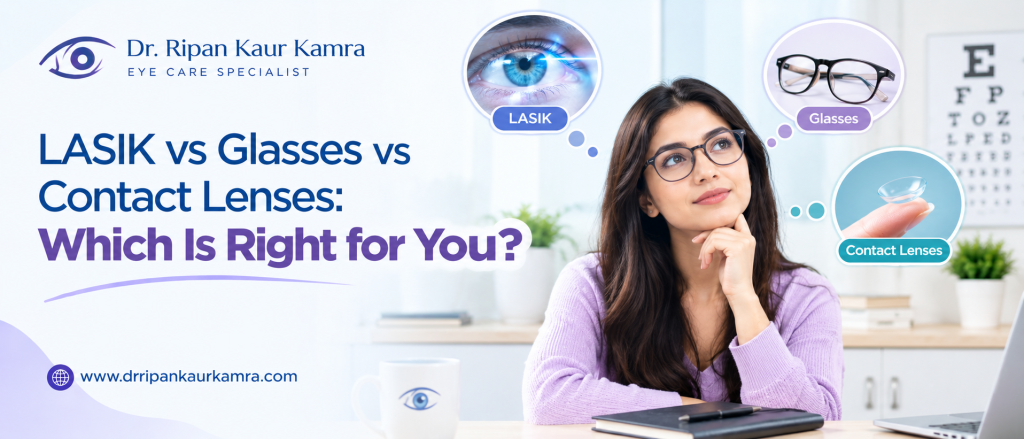
If you have blurry vision because of nearsightedness, farsightedness or astigmatism, you may be considering different ways to see clearly. Should you continue wearing glasses, switch to contact lenses or explore LASIK eye surgery? The answer depends on more than convenience. Your eye health, prescription stability, lifestyle, budget, expectations and willingness to accept the risks of surgery all matter when choosing a vision correction method. In this guide to LASIK vs glasses, we compare the advantages, limitations, costs, maintenance requirements and suitability of each option. You will also learn how LASIK compares with contact lenses and which questions to ask an ophthalmologist before making a decision.
LASIK vs Glasses vs Contact Lenses: Quick Comparison
All three options can correct many common refractive errors, but they work differently.
| Feature | Glasses | Contact lenses | LASIK |
| How it works | Lenses worn in front of the eyes | Lenses placed on the eye’s surface | Laser reshapes the cornea |
| Daily handling | Wear and clean glasses | Insert, remove and care for lenses | No daily corrective lens required for many activities after successful surgery |
| Maintenance | Cleaning and replacement when needed | Regular cleaning or daily disposal, depending on type | Post-operative care and follow-up |
| Upfront cost | Usually lower | Low to moderate initially | Usually higher |
| Ongoing expense | Replacement frames or lenses | Regular purchases and solutions | May reduce ongoing lens expenses, but follow-up and future glasses can still cost money |
| Surgical risks | No surgical risk from wearing glasses | Infection risk if lens hygiene is poor | Surgical risks, including dry eye, glare and possible under- or over-correction |
| Reversible? | Yes | Yes, when removed | No; the corneal changes are intended to be permanent |
| Best suited to | People seeking a simple, non-surgical option | People wanting lens-free frames and good peripheral vision | Carefully selected adults wanting to reduce dependence on glasses or contacts |
Important: LASIK aims to reduce dependence on corrective lenses; it does not guarantee perfect vision or lifelong freedom from glasses. The best choice is the one that fits your individual eye health and needs.
What Is LASIK Eye Surgery?
LASIK stands for laser-assisted in situ keratomileusis. It is a type of refractive surgery that uses a laser to reshape the cornea, the clear front surface of the eye. This changes how light focuses on the retina and can improve vision affected by certain refractive errors. LASIK is commonly used for:
- Myopia (nearsightedness): Distant objects appear blurry.
- Hyperopia (farsightedness): Near vision may be difficult, and distance vision can also be affected.
- Astigmatism: Uneven focusing can make vision blurred or distorted.
Before recommending LASIK, an ophthalmologist evaluates your prescription, corneal shape and thickness, tear-film health and overall eye condition. LASIK is not suitable for everyone. A changing prescription, significant dry eye, certain corneal conditions, some eye diseases or other health factors may make surgery unsuitable or require additional assessment. LASIK also does not prevent the normal age-related loss of near focusing ability known as presbyopia. Reading glasses may still be needed as you get older.
Read Here : LASIK benefits, risks and recovery
Glasses vs LASIK: Which Is Better?
The choice between glasses and LASIK often comes down to convenience, cost, visual needs and your comfort with surgery.
Advantages of Glasses
Glasses are a practical choice for many people because they correct vision without touching the eye or requiring surgery. Benefits include:
- No surgical procedure or recovery period.
- Easy to put on and remove.
- Different prescriptions and lens designs are available.
- Can be updated if your vision changes.
- May provide additional protection when appropriate lenses are selected.
- Usually have a lower initial cost than LASIK.
Glasses can also be a sensible option for people whose prescriptions are still changing or who are not suitable candidates for refractive surgery.
Read More: Who is a good candidate for LASIK?
Limitations of Glasses
Some people find glasses inconvenient during exercise, outdoor activities or long working days. Frames may slip, lenses may fog up, and peripheral vision can be affected by the design of the frames or lenses. You may also need different glasses for particular tasks, such as reading or computer work, depending on your prescription and age.
Advantages of LASIK Compared With Glasses
For suitable candidates, LASIK may reduce the need to wear glasses for everyday activities. This can be convenient for people who play sports, travel frequently or dislike managing frames. Other potential advantages include:
- Reduced dependence on glasses or contact lenses.
- Convenience during physical activity.
- Less need to purchase replacement prescription lenses.
- No daily insertion or removal of contact lenses.
However, these advantages must be balanced against the cost, surgical risks and possibility of needing glasses after the procedure.
Who May Prefer Glasses Over LASIK?
Glasses may be a better choice if you are comfortable wearing them, your prescription is changing, you have a condition that makes LASIK unsuitable, or you do not want to accept surgical risks. There is no medical requirement to have LASIK simply because you wear glasses. If glasses provide clear, comfortable vision and suit your lifestyle, continuing to use them is a valid option.
LASIK vs Contact Lenses: What Should You Consider?
Contact lenses sit directly on the tear film over the cornea. They correct vision without frames and may suit people who want a natural field of view. LASIK, in contrast, reshapes the cornea surgically to reduce dependence on external corrective lenses.
Advantages of Contact Lenses
Contact lenses can be convenient for sports and activities where glasses may move or fall off. They also avoid frame-related fogging and can provide a wide field of vision. Potential benefits include:
- No frames obstructing peripheral vision.
- A convenient option for sports and active lifestyles.
- Flexibility to change lens types or prescriptions.
- No surgery required.
- An option for people who are not suitable for LASIK, provided their eyes can safely tolerate contact lenses.
Contact lenses must be prescribed and fitted appropriately. Comfort and suitability vary by lens type and individual eye health.
Limitations and Risks of Contact Lenses
Contact lenses require regular handling and careful hygiene. Wearing them for longer than advised, sleeping in lenses not approved for overnight use, or exposing them to water can increase the risk of serious eye infections. Common challenges include:
- Dryness or discomfort during wear.
- Regular spending on lenses and care products.
- Cleaning and replacement requirements for reusable lenses.
- Difficulty wearing lenses for long periods in some environments.
- Risk of infection or corneal injury if used incorrectly.
Remove your lenses and contact an eye-care professional if you develop eye pain, redness, light sensitivity, discharge or sudden blurry vision.
Advantages of LASIK Compared With Contact Lenses
For suitable candidates, LASIK may reduce the need to buy, handle, clean and replace contact lenses. It may also be useful for people who experience lens-related discomfort or find lens maintenance difficult. However, LASIK can itself cause or worsen dry eye and may lead to glare, halos or other visual symptoms. It should not automatically be considered the solution for contact-lens discomfort; the cause of that discomfort needs to be assessed first.
Who May Prefer Contact Lenses Over LASIK?
Contact lenses may be preferable if you want to avoid surgery, value the flexibility of changing prescriptions or prefer a non-permanent correction method. They may also be useful when your prescription is not stable enough for LASIK, provided an eye-care professional confirms that contact lenses are appropriate for you.
Cost Comparison: LASIK vs Glasses vs Contact Lenses
Cost is an important part of the decision, especially when comparing a one-time procedure with recurring purchases.
Glasses: Initial and Replacement Costs
Glasses typically have a lower entry cost. However, expenses may arise from replacement frames, prescription changes, lens coatings, specialised lenses or separate pairs for different activities. How much you spend depends on your prescription, the frames you choose and how often you replace them.
Contact Lenses: Recurring Expenses
Contact lenses can involve regular spending on lenses, cleaning solutions, storage cases and eye examinations. Daily disposable lenses and reusable lenses have different cost structures. Over several years, the total may become substantial, but the amount varies widely according to the lens type and how often you wear them.
LASIK: Higher Upfront Cost
LASIK generally involves a higher initial expense than buying basic glasses. The total price can vary according to the clinic, technology, pre-operative tests, procedure and follow-up care. Some people may spend less on corrective lenses over time after LASIK, while others may still need glasses or additional treatment. Therefore, it is not accurate to assume that LASIK is always the cheapest option in the long run. How to compare fairly: Ask for the full cost of the procedure, what follow-up visits are included, whether medication is included and what additional expenses may arise. Compare this with your estimated glasses or contact-lens spending over the same period.
Is LASIK Safe? Benefits, Risks and Limitations
LASIK is an established refractive procedure, but it is still surgery and carries potential risks. A thorough pre-operative evaluation and realistic expectations are essential.
Potential Benefits
For appropriately selected patients, LASIK may:
- Improve uncorrected distance vision.
- Reduce dependence on glasses or contact lenses.
- Make some sports and everyday activities more convenient.
- Reduce the need for routine corrective lens purchases.
The degree of improvement varies from person to person. Some people continue to need glasses for particular activities or prescriptions.
Possible Risks and Side Effects
Potential side effects or complications include:
- Dry eye or fluctuating vision.
- Glare, halos or starbursts around lights.
- Light sensitivity.
- Blurred or double vision.
- Under-correction or over-correction.
- Infection or problems with corneal healing.
- Rarely, a loss of best-corrected vision.
Some symptoms improve during healing, but others can persist. Your ophthalmologist should explain the risks relevant to your eyes, occupation and lifestyle before you decide.
Does LASIK Permanently Remove the Need for Glasses?
Not necessarily. LASIK permanently reshapes the cornea, but your eyes can continue to change with age. Presbyopia can make reading glasses necessary later in life, and some people may still need corrective lenses for distance or night driving. LASIK should be considered a way to reduce dependence on glasses or contact lenses—not a promise that you will never need them again.
Who Is a Good Candidate for LASIK?
LASIK candidacy depends on a comprehensive examination rather than age or glasses prescription alone. A person may be considered for LASIK if they:
- Are an adult who meets the relevant requirements for the procedure.
- Have a sufficiently stable prescription.
- Have corneas with suitable thickness and shape.
- Have good overall eye health.
- Understand the benefits, limitations and possible risks.
- Have realistic expectations about the results.
LASIK may not be appropriate for people with significant dry eye, keratoconus, certain corneal problems, active eye infections, a changing prescription or some other eye or health conditions. Pregnancy, breastfeeding, certain medications and poorly controlled medical conditions may also affect the timing or suitability of surgery. A detailed examination is needed to determine whether LASIK, another refractive procedure, contact lenses or glasses would be the safer option.
How to Choose the Right Vision Correction Option for Your Lifestyle
Choose Glasses If You Value Simplicity
Glasses are a strong option if you want a non-surgical solution, prefer low-maintenance vision correction or need flexibility as your prescription changes.
Choose Contact Lenses If You Want Flexibility Without Frames
Contact lenses may suit people who enjoy sports or prefer the appearance and field of view they provide. This option requires proper fitting, hygiene and regular replacement.
Consider LASIK If You Want Less Dependence on Corrective Lenses
LASIK may be worth discussing if your prescription is stable, your eyes are suitable and you understand that surgery has risks and may not eliminate all future need for glasses.
Consider Your Work and Activities
People who work outdoors, participate in sports, spend long hours at screens or require excellent night vision may have different priorities. Discuss the visual demands of your daily activities with your ophthalmologist rather than selecting an option based on convenience alone.
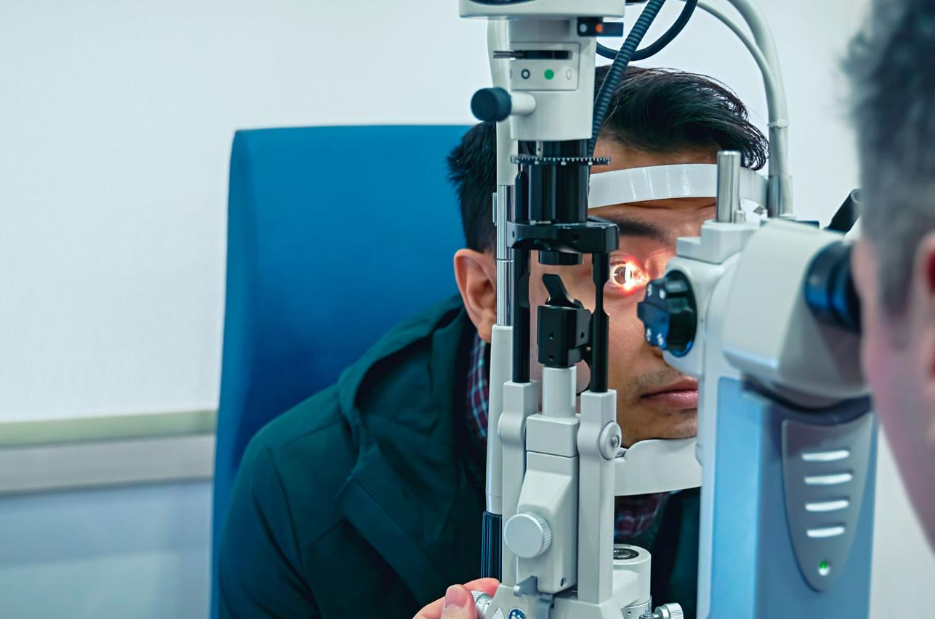
What Happens During a LASIK Suitability Assessment?
If you are considering LASIK, your eye-care professional may recommend a detailed assessment that includes:
- Prescription measurement: Checks the type and degree of refractive error and whether the prescription is stable.
- Corneal mapping and measurements: Evaluates corneal shape and thickness.
- Tear-film assessment: Looks for dry eye or other surface problems that could affect comfort and outcomes.
- General eye examination: Checks for eye conditions that may affect surgical suitability.
- Lifestyle and medical history: Reviews health conditions, medications, work requirements and expectations.
Contact lens wearers may be asked to stop wearing their lenses before certain measurements because lenses can temporarily change the corneal shape. The required time depends on the type of lens and your clinician’s instructions. After reviewing the results, the ophthalmologist can discuss whether LASIK is suitable or whether glasses, contact lenses or another option is preferable.
Frequently Asked Questions
1. Is LASIK better than glasses?
LASIK may be more convenient for people who want to reduce dependence on glasses, but it is not automatically better. Glasses avoid surgical risks and remain a good option for many people.
2. Is LASIK better than contact lenses?
LASIK can reduce the need for contact lenses in suitable candidates. Contact lenses remain a non-surgical and flexible alternative, but they require correct hygiene and can cause complications if misused.
3. Which option is safest for the eyes?
Glasses avoid contact-lens-related corneal risks and surgical risks. Contact lenses can be safe when properly fitted and used as directed. LASIK has potential surgical complications. Your individual eye health affects which option is most appropriate.
4. Is LASIK worth the cost?
It may be worthwhile for someone who values reduced dependence on glasses or contacts and is an appropriate candidate. Compare the total procedure cost and follow-up expenses with your likely long-term lens costs before deciding.
5. Can I get LASIK if I have dry eyes?
Dry eye can make LASIK less suitable because the procedure may worsen symptoms. Your eye surface should be assessed and any dryness managed before a decision is made.
Read More: Dry eyes after LASIK
6. Will I need glasses after LASIK?
Possibly. Some people need glasses for certain tasks, residual refractive error or age-related near-vision changes. LASIK cannot prevent presbyopia.
7. What age is best for LASIK?
LASIK is performed in eligible adults whose prescriptions are sufficiently stable. The appropriate timing depends on the individual’s eye health, prescription and the requirements of the procedure—not age alone.
8. Can I switch from contact lenses to LASIK?
You can explore LASIK if you wear contact lenses, but you must first undergo a suitability assessment. Your surgeon may ask you to stop wearing contacts temporarily before measurements.
9. Can LASIK correct astigmatism?
LASIK can correct many cases of astigmatism, depending on the degree, corneal characteristics and other factors. An eye examination is needed to determine suitability.
10. What should I do before choosing LASIK?
Arrange a comprehensive eye examination, ask about expected results and possible complications, understand the full cost, and compare the benefits with continuing to wear glasses or contacts.
Make an Informed Choice for Your Eye Health
Choosing between LASIK, glasses and contact lenses is a personal decision. Glasses provide a straightforward non-surgical solution, contact lenses offer flexibility without frames, and LASIK may reduce dependence on corrective lenses for suitable candidates. The right option depends on your prescription, eye health, daily activities, budget and comfort with risk. A comprehensive eye examination can help you compare these choices and make a decision based on your individual needs.
Consult Dr. Ripan Kaur Kamra for Personalised Eye-Care Guidance
If you are exploring LASIK vs glasses or LASIK vs contact lenses, consult an ophthalmologist before deciding on a procedure. A professional assessment can help establish whether laser vision correction is suitable and explain alternatives based on your eyes and lifestyle.