WHAT IS SQUINT?
Squint, medically known as strabismus, occurs when the two eyes do not align properly while looking at an object. One eye may look straight while the other eye turns inward, outward, upward or downward.
When the eyes are properly aligned, they work together to provide a single image and support depth perception. In some children, the brain may suppress the image from the misaligned eye, which can affect visual development and may lead to amblyopia (lazy eye). Adults who develop squint may experience double vision.
COMMON SYMPTOMS OF SQUINT
Eyes Pointing Different Directions
Double Vision
Closing One Eye
Head Tilting or Turning
Difficulty With Depth Perception
Reduced Vision in One Eye
CAUSES & RISK FACTORS
01. Refractive Errors
Significant differences in refractive error between the eyes or certain focusing problems can be associated with squint.
02. Family History
Having a family history of strabismus may increase the likelihood of developing the condition.
03. Eye Muscle Problems
Problems affecting the muscles responsible for eye movement can contribute to misalignment.
04. Previous Eye Injury or Surgery
An eye injury or previous surgery may sometimes contribute to acquired eye misalignment.
SQUINT EVALUATION & EYE EXAMINATION
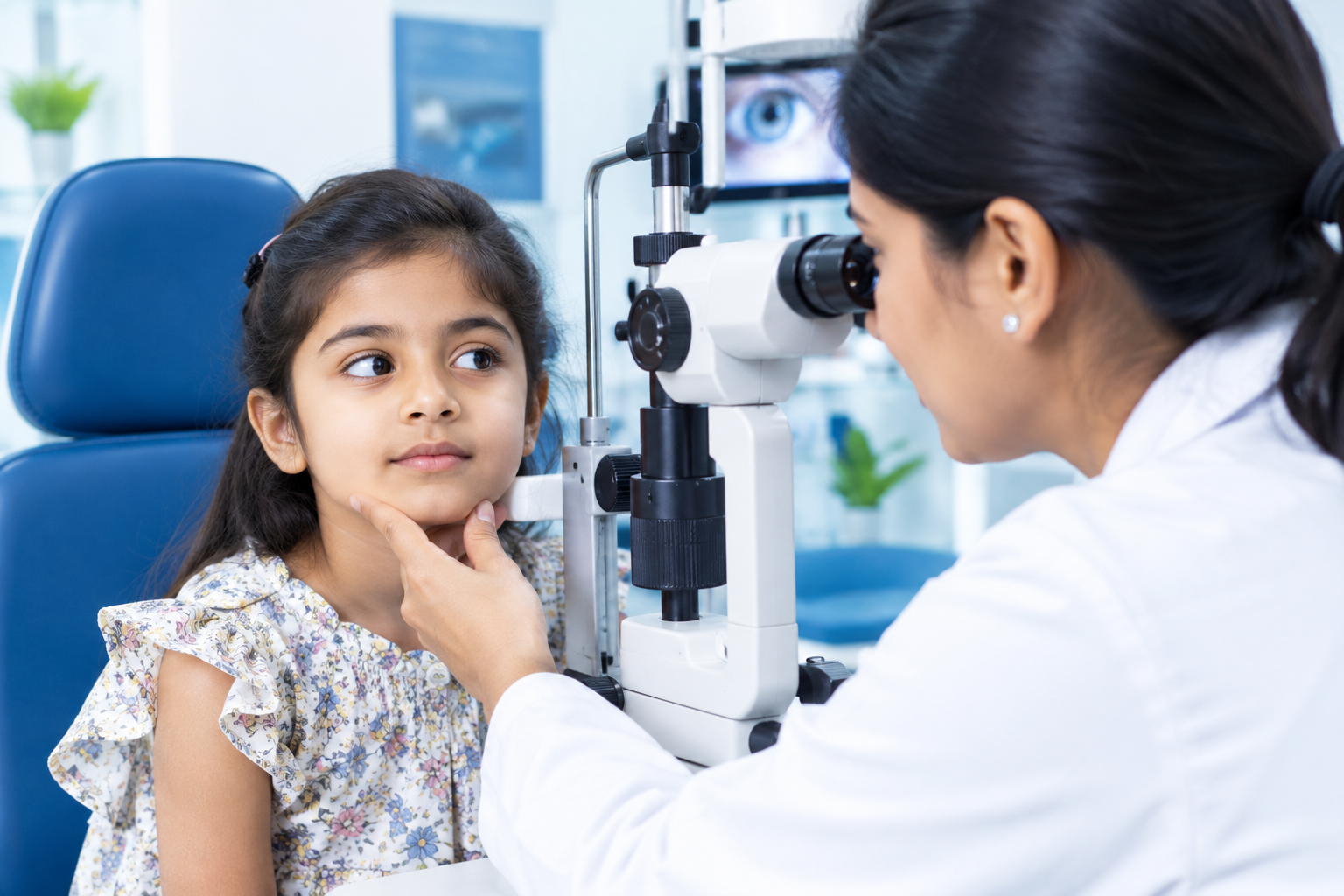
A detailed eye examination is important to understand the type, direction and amount of eye misalignment. The ophthalmologist also evaluates vision, eye movements and how well both eyes work together.

Examination process
1.Visual Acuity Test
2.Eye Alignment Assessment
3.Cover Test
4.Eye Movement Examination
5.Refraction Test
6. Binocular Vision & Depth Perception
7.Detailed Eye Examination

HOW IS SQUINT TREATED?
01. Glasses
Corrective glasses may be recommended when refractive errors contribute to the eye misalignment.
02. Patching
In some children, patching the stronger eye may be recommended to encourage the weaker eye to develop better vision.
03. Prisms
Prism lenses may sometimes be used to help manage double vision or certain types of eye misalignment.
04. Eye Exercises / Orthoptic Therapy
Specific exercises may be recommended in selected cases to improve coordination between the eyes.
WHY CHOOSE DR. RIPAN KAUR KAMRA?

Dr. Ripan Kaur Kamra
Dr. Ripan Kaur Kamra is a dedicated and skilled ophthalmologist with specialized expertise in cataract surgery and comprehensive eye care. With a strong clinical background and a patient-first approach, she is known for delivering safe, precise, and personalized eye treatment focused on long-term visual clarity and comfort.
Dr. Ripan Kaur completed her MBBS, followed by MS in Ophthalmology, gaining a solid foundation in both medical and surgical aspects of eye care. Her advanced training has equipped her with in-depth knowledge of diagnosing and managing a wide range of ocular conditions with accuracy and confidence.
As an experienced Phaco Surgeon, Dr. Ripan Kaur Kamra specializes in modern, minimally invasive cataract surgery, using advanced phacoemulsification techniques to achieve excellent visual outcomes and faster recovery for patients. She emphasizes precision, safety, and patient comfort throughout the surgical process.
Dr. Ripan Kaur strongly believes in combining advanced technology with compassionate care. She focuses on early diagnosis, customized treatment planning, and clear patient communication, ensuring that every individual feels informed, reassured, and confident about their eye care journey.
SQUINT TREATMENT JOURNEY
01. Eye Examination
A detailed examination assesses vision, eye alignment, eye movements and binocular function.
02. Squint Diagnosis
The ophthalmologist determines the type and amount of eye misalignment and evaluates possible contributing factors.
03. Personalized Treatment
Treatment may include glasses, patching, prisms, exercises or surgery depending on the individual condition.
04. Regular Monitoring
Follow-up examinations help monitor vision, eye alignment and the response to treatment.
WHEN SHOULD YOU SEE AN EYE DOCTOR?
01. One Eye Frequently Turns
Especially if the eye turns inward, outward, upward or downward.
02. You Notice Double Vision
New or persistent double vision should be evaluated.
03. A Child Tilts or Turns Their Head
An unusual head position may sometimes be associated with eye misalignment.
04. One Eye Has Reduced Vision
Reduced vision in one eye should be assessed, particularly in children.
05. Squint Is Becoming More Frequent
Increasing or newly noticeable misalignment should not be ignored.
06. Sudden-Onset Squint
New squint or sudden double vision in an adult requires timely medical evaluation.
Other Eye Care Services
LASIK
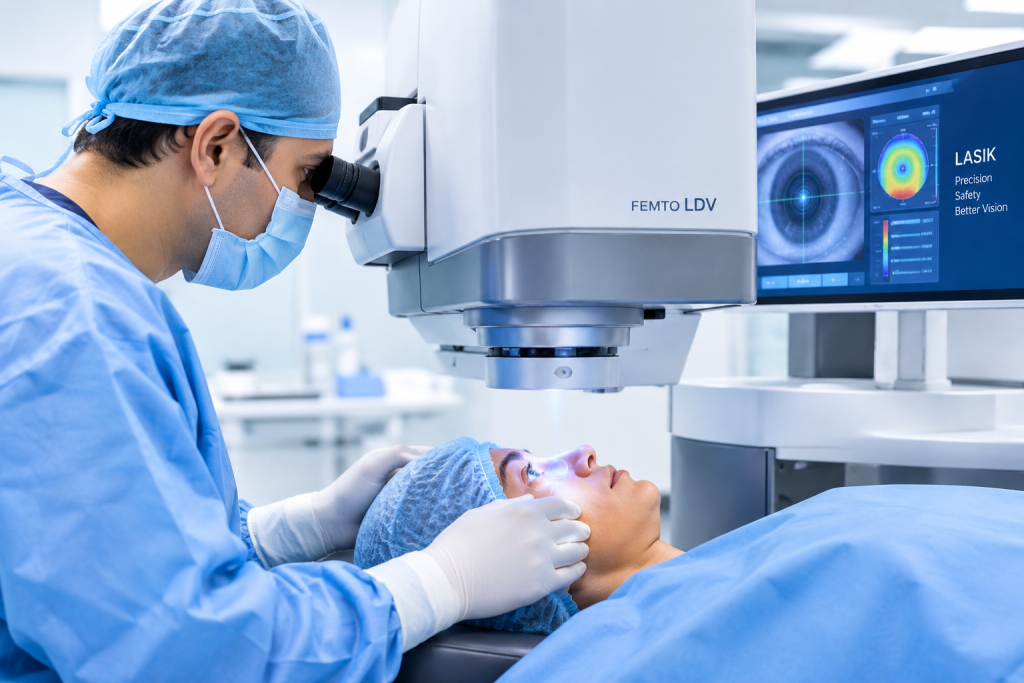
LASIK is a laser vision-correction procedure used to correct refractive errors such as myopia, hyperopia and astigmatism. During LASIK, a laser reshapes the cornea so that light can focus more accurately on the retina, which may reduce dependence on glasses or contact lenses.
CATARACT
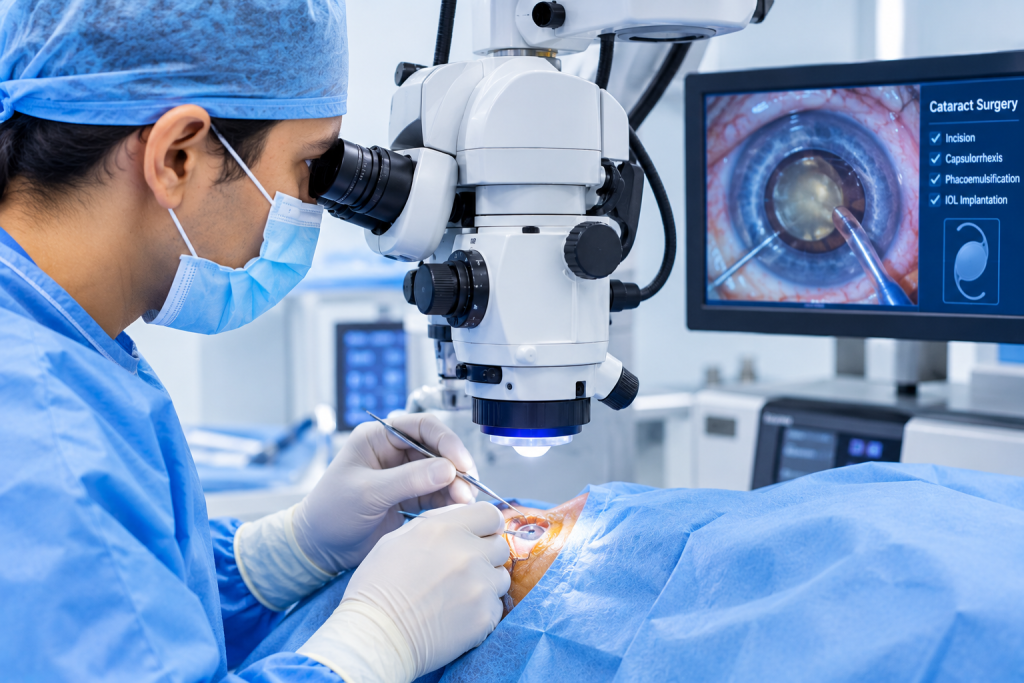
Cataract is a clouding of the eye’s natural lens that can cause blurry or hazy vision, faded colors, glare and difficulty seeing at night. Cataracts usually develop gradually and may begin to interfere with everyday activities such as reading, driving or watching TV.
DRY EYE
Dry eye treatment focuses on relieving symptoms and addressing the underlying cause of inadequate or unstable tears. Depending on the condition, treatment may include artificial tears, prescription eye drops, lifestyle changes and other specialized treatments.
Frequently Asked Questions
Q1.Can squint be treated?
Ans: Yes. Treatment depends on the type and cause and may include glasses, patching, prisms, exercises or surgery.
Q2.Can squint affect vision?
Ans: Yes. In children, untreated misalignment can interfere with visual development and may contribute to amblyopia.
Q3.Can adults develop squint?
Ans: Yes. Squint can develop in adults, and newly developed misalignment may cause double vision and should be evaluated.
Q4.Does every squint require surgery?
Ans: No. Treatment depends on the individual condition. Some patients may be managed with glasses, patching, prisms or other approaches. Surgery is considered only when appropriate.
Q5.Can squint come and go?
Ans: Yes. Some forms of strabismus may be intermittent, meaning the eye may deviate only at certain times.
Q6.Is early treatment important for children?
Ans:Yes. Early assessment is important because the visual system is developing during childhood, and persistent eye misalignment can affect visual development.