WHAT IS LASIK EYE SURGERY?

LASIK, or Laser-Assisted In Situ Keratomileusis, is a type of refractive eye surgery that uses a laser to reshape the cornea. By changing the way light is focused onto the retina, LASIK can correct certain refractive errors and may reduce the need for glasses or contact lenses.

COMMON VISION PROBLEMS LASIK CAN CORRECT

Myopia

Difficulty seeing distant objects clearly while near objects may appear clearer.

Hyperopia

Difficulty focusing clearly on nearby objects and, in some cases, distance vision may also be affected.

Astigmatism

Blurred or distorted vision caused by an irregular curvature of the cornea or lens.

LASIK EVALUATION & EYE EXAMINATION

Before considering LASIK eye surgery, a comprehensive eye examination is important to understand your current vision, corneal condition, eye health and individual visual requirements. The evaluation helps the ophthalmologist determine whether LASIK is suitable and which treatment approach may be appropriate for your eyes.

lasik

Examination process

1. Vision & Refraction Test
2.Corneal Mapping & Topography
3. Corneal Thickness Measurement
4. Comprehensive Eye Health Examination
5.Dry Eye & Ocular Surface Assessment
6. Eye Pressure & Internal Eye Examination & Eye History

HOW IS LASIK EYE SURGERY PERFORMED?

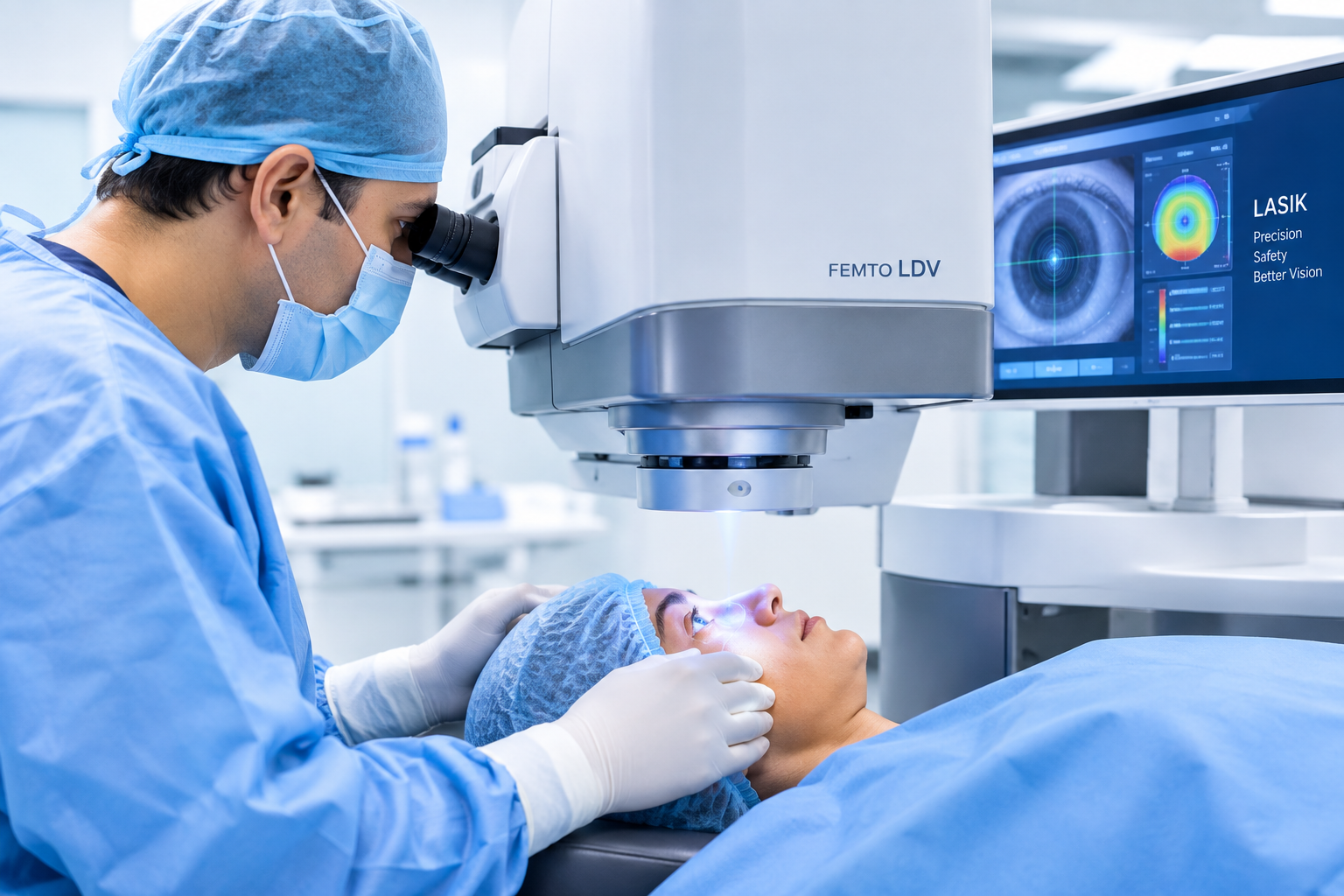
LASIK is a laser vision correction procedure that reshapes the cornea to correct certain refractive errors such as myopia, hyperopia and astigmatism. Before the procedure, detailed measurements of the eye and cornea are used to create an individualized treatment plan.
The procedure is generally performed on an outpatient basis, and the exact technique and treatment plan may vary according to the patient’s eye measurements, corneal condition and visual requirements.

LASIK Surgery Procedure

Eye Preparation

Before starting LASIK, the eye is carefully prepared for the procedure. Numbing eye drops are applied to make the eye comfortable during surgery. The eyelids and surrounding area are cleaned, and an eyelid holder may be used to prevent blinking and keep the eye open. A suction ring may also be used briefly to help stabilize the eye during corneal flap creation. You may feel some pressure during this step, and your vision can temporarily become dim or dark.

Corneal Flap Creation

After the eye is properly prepared and numbed, the surgeon creates a very thin flap on the surface of the cornea. Depending on the LASIK technique, the flap may be created using a femtosecond laser or another specialized instrument. The flap remains attached to the cornea by a small hinge and is gently lifted to expose the underlying corneal tissue. This allows the excimer laser to access the cornea and reshape it according to the patient's individual eye measurements and treatment plan. The flap is later repositioned over the treated area, where it begins to heal naturally.

Laser Corneal Reshaping

Once the corneal flap is gently lifted, an excimer laser is used to precisely reshape the underlying corneal tissue according to the patient's individual eye measurements and treatment plan. The patient is asked to focus on a target light while the laser removes microscopic amounts of corneal tissue. This changes the shape of the cornea so that incoming light can be focused more accurately onto the retina, helping correct refractive errors such as myopia, hyperopia and astigmatism.

Flap Repositioning

After the cornea has been reshaped, the surgeon carefully places the corneal flap back into its original position and gently smooths it. Stitches are generally not required because the flap naturally adheres to the underlying cornea and begins healing in place. The surgeon checks the flap position before completing the procedure.

WHO IS A GOOD CANDIDATE FOR LASIK?

01. Age

LASIK is generally considered for adults aged 18 years or older. In many cases, doctors may prefer to perform the procedure when the patient’s vision has become stable, as eye power can continue to change during the younger adult years. Age is therefore considered together with the stability of the prescription and overall eye health rather than as the only deciding factor.

02. Stable Prescription

Your glasses or contact-lens prescription should generally have remained stable before LASIK. During the evaluation, your ophthalmologist may review your previous prescriptions to determine whether your eye power has changed significantly. If the prescription is still changing, LASIK may need to be postponed until the vision becomes more stable, because the procedure is planned according to your measured refractive error.

03. Healthy Cornea

A healthy cornea is an important part of LASIK suitability because the procedure reshapes the cornea to correct refractive errors. Your ophthalmologist will evaluate the corneal thickness, shape, curvature and overall structure using detailed measurements and corneal mapping. Conditions such as a very thin or irregular cornea, keratoconus, corneal scarring or other corneal abnormalities may affect whether LASIK is appropriate.

04. Overall Eye Health

Before LASIK, your ophthalmologist will check the overall health of your eyes and look for conditions that could affect the procedure or healing. The examination may include assessment of the cornea, tear film, eye pressure and other eye structures. Conditions such as significant dry eye, certain corneal diseases, cataract affecting vision, advanced glaucoma or other eye problems may affect LASIK suitability and may require treatment or further evaluation first.

BENEFITS & LIMITATIONS OF LASIK

Potential Benefits

  • May reduce dependence on glasses
  • May reduce dependence on contact lenses
  • Corrects certain refractive errors
  • Can provide clearer functional vision for suitable candidates

Important Limitations

  • LASIK does not correct presbyopia.
  • Some people may still need glasses for certain activities.
  • Results and suitability vary between individuals.
  • LASIK has potential risks and side effects that should be discussed before surgery.

LASIK RECOVERY & AFTERCARE

Recovery varies between individuals. Your ophthalmologist will provide specific instructions for eye drops, eye protection and follow-up care. Some patients may experience temporary dryness, discomfort, blurred vision, glare or halos during the recovery period.

First Few Hours

  • Mild irritation or scratchiness may occur.
  • Vision may initially be blurry.
  • Rest and follow the prescribed instructions.

First Few Days

  • Use prescribed eye drops as directed.
  • Avoid rubbing or pressing the eyes.
  • Protect the eyes as advised.

Follow-Up

Regular follow-up examinations help monitor healing and vision after surgery.

LASIK RISKS & POSSIBLE SIDE EFFECTS

Possible Side Effects

  • Dry eyes
  • Temporary blurred or fluctuating vision
  • Glare or halos around lights
  • Light sensitivity
  • Night-vision difficulties
  • Eye discomfort
  • Overcorrection or undercorrection

Rare but more serious complications can also occur, so suitability and potential risks should be discussed carefully with an ophthalmologist before surgery.

LASIK Surgery by Dr. Ripan Kaur Kamra

Dr. Ripan Kaur Kamra, ophthalmologist and eye specialist

Dr. Ripan Kaur Kamra

Dr. Ripan Kaur Kamra is a dedicated and skilled ophthalmologist with specialized expertise in cataract surgery and comprehensive eye care. With a strong clinical background and a patient-first approach, she is known for delivering safe, precise, and personalized eye treatment focused on long-term visual clarity and comfort.
Dr. Ripan Kaur completed her MBBS, followed by MS in Ophthalmology, gaining a solid foundation in both medical and surgical aspects of eye care. Her advanced training has equipped her with in-depth knowledge of diagnosing and managing a wide range of ocular conditions with accuracy and confidence.
As an experienced Phaco Surgeon, Dr. Ripan Kaur Kamra specializes in modern, minimally invasive cataract surgery, using advanced phacoemulsification techniques to achieve excellent visual outcomes and faster recovery for patients. She emphasizes precision, safety, and patient comfort throughout the surgical process. Dr. Ripan Kaur strongly believes in combining advanced technology with compassionate care. She focuses on early diagnosis, customized treatment planning, and clear patient communication, ensuring that every individual feels informed, reassured, and confident about their eye care journey.
Other Eye Care Services

Refractive surgery using laser eye treatment for vision correction.

Refractive Surgery

Tired of glasses or contact lenses? Explore refractive surgery with advanced vision correction options such as LASIK, PRK and SMILE, designed to correct suitable refractive errors and help reduce dependence on glasses.

Eye examination for glaucoma using a slit lamp by an ophthalmologist.

Glaucoma

Concerned about glaucoma or changes in your vision? Get expert glaucoma care with comprehensive eye evaluation, personalized treatment and ongoing monitoring to help protect your vision and manage eye pressure.

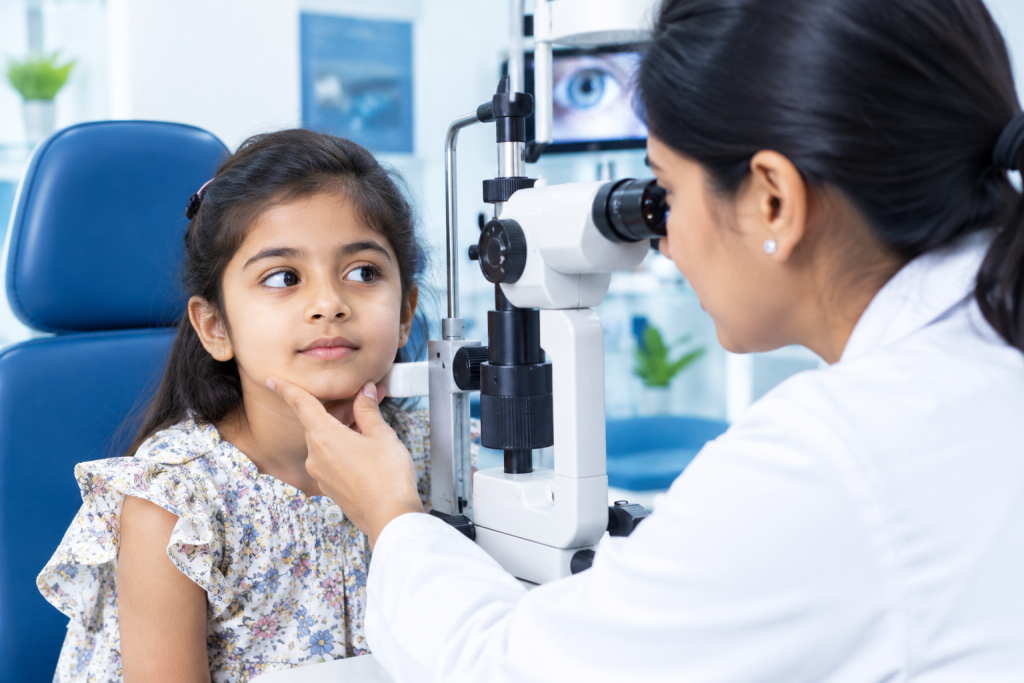
Squint treatment and eye examination of a child by an ophthalmologist

Squint

Concerned about crossed or misaligned eyes? Get expert squint care with detailed eye evaluation, personalized treatment and advanced management options to help improve eye alignment and visual function.

Frequently Asked Questions

Q1.Is LASIK painful?
Ans: Numbing eye drops are used during the procedure. Some temporary discomfort, scratchiness or burning may occur afterward.

Q2.Can LASIK remove the need for glasses completely?
Ans: LASIK may reduce dependence on glasses or contact lenses, but some people may still need glasses for certain activities.

Q3.Does LASIK correct astigmatism?
Ans: LASIK can treat certain types and degrees of astigmatism, depending on individual suitability.

Q4.Can everyone undergo LASIK?
Ans: No. Corneal health, prescription stability, dry eye, overall eye health and other factors are considered before surgery.

Q5.Can LASIK correct age-related near-vision problems?
Ans: LASIK does not correct presbyopia. Some patients may discuss alternatives such as monovision with their ophthalmologist.

Q6.How soon can vision improve after LASIK?
Ans: Vision can change during the early recovery period, and the timeline varies between individuals. Your doctor will monitor your recovery during follow-up visits.