WHAT IS GLAUCOMA?
Glaucoma is a group of eye diseases that can damage the optic nerve, which carries visual information from the eye to the brain. In many cases, increased pressure inside the eye is an important risk factor, although glaucoma can also occur when eye pressure is within a normal range.
Glaucoma often develops gradually, and many people may not notice changes in their vision during the early stages. As the condition progresses, it can affect peripheral or side vision and may eventually lead to significant vision loss if left untreated.
COMMON SYMPTOMS OF GLAUCOMA
Loss of Peripheral Vision
Difficulty seeing objects or movement at the sides of your visual field may occur as glaucoma progresses.
Difficulty Seeing in Certain Situations
Some people may gradually notice changes in their overall visual function.
Blind Spots
As optic-nerve damage progresses, areas of missing vision can develop.
Advanced Vision Loss
Untreated glaucoma can eventually cause severe vision loss.
GLAUCOMA RISK FACTORS
01. Increasing Age
The risk of developing glaucoma generally increases as you get older. Glaucoma becomes more common with age because changes in the eye and its drainage system can increase the risk of optic nerve damage. Regular eye examinations become especially important as you age, even if you do not notice any changes in your vision.
02. Family History
Having a close family member with glaucoma can increase your risk of developing the condition. If glaucoma runs in your family, it is important to tell your ophthalmologist so that your eyes can be monitored regularly. Family history is particularly relevant because some forms of glaucoma can have a genetic component.
03. High Eye Pressure
Higher-than-usual eye pressure can increase the risk of optic nerve damage and glaucoma. However, high eye pressure does not always mean glaucoma, and glaucoma can also occur with normal eye pressure. That is why eye pressure is assessed along with the optic nerve and other eye tests.
04. Previous Eye Injury or Surgery
A previous eye injury or certain eye surgeries can sometimes affect the normal drainage of fluid from the eye and contribute to secondary glaucoma. If you have had an eye injury or surgery in the past, your ophthalmologist may consider this history while assessing your glaucoma risk.
GLAUCOMA EVALUATION & EYE EXAMINATION
Glaucoma may have few or no symptoms in its early stages, a comprehensive eye examination is important for detection and monitoring. The evaluation may include several tests depending on your symptoms, risk factors and eye health.

Examination process
1. Visual acuity test
2. Eye Pressure Measurement
3. Optic Nerve Examination
4. Visual Field Test
5.Dilated Eye Examination
6. Additional Glaucoma Tests

HOW IS GLAUCOMA TREATED?
Glaucoma treatment is individualized according to the type of glaucoma, eye pressure, optic-nerve condition, visual-field changes and overall eye health.
The main treatment options include
01. Glaucoma Eye Drops
Prescription eye drops are commonly used to lower eye pressure and help protect the optic nerve from further damage. They may work by reducing fluid production or improving fluid drainage.
02. Laser Treatment
Laser treatment may be recommended for certain types of glaucoma. Depending on the type, laser procedures can help improve the drainage of fluid from the eye and lower eye pressure.
03. Glaucoma Surgery
If medicines or laser treatment do not adequately control glaucoma, surgery may be considered. Surgical options can improve fluid drainage and help lower eye pressure.
GLAUCOMA MANAGEMENT & MONITORING
Protecting Your Vision Over Time
Glaucoma usually requires long-term monitoring. Even when you do not notice symptoms, regular follow-up appointments are important to check eye pressure, optic-nerve health and visual function.
01. Take Medicines as Prescribed
If glaucoma eye drops are prescribed, use them exactly as directed. Consistent treatment is important for controlling eye pressure.
02. Attend Regular Follow-Ups
Your doctor may monitor eye pressure, optic nerve and visual field over time.
03. Report New Vision Changes
Tell your ophthalmologist about any new or worsening vision changes.
04. Know Your Family History
Because glaucoma can run in families, relatives may also benefit from discussing their risk with an eye-care professional.
05. Don’t Stop Treatment on Your Own
Glaucoma medicines may not produce an obvious improvement in how you feel or see, but they can help prevent further damage. Do not stop prescribed treatment without discussing it with your ophthalmologist.
WHY CHOOSE DR. RIPAN KAUR KAMRA?

Dr. Ripan Kaur Kamra
Dr. Ripan Kaur Kamra is a dedicated and skilled ophthalmologist with specialized expertise in cataract surgery and comprehensive eye care. With a strong clinical background and a patient-first approach, she is known for delivering safe, precise, and personalized eye treatment focused on long-term visual clarity and comfort.
Dr. Ripan Kaur completed her MBBS, followed by MS in Ophthalmology, gaining a solid foundation in both medical and surgical aspects of eye care. Her advanced training has equipped her with in-depth knowledge of diagnosing and managing a wide range of ocular conditions with accuracy and confidence.
As an experienced Phaco Surgeon, Dr. Ripan Kaur Kamra specializes in modern, minimally invasive cataract surgery, using advanced phacoemulsification techniques to achieve excellent visual outcomes and faster recovery for patients. She emphasizes precision, safety, and patient comfort throughout the surgical process.
Dr. Ripan Kaur strongly believes in combining advanced technology with compassionate care. She focuses on early diagnosis, customized treatment planning, and clear patient communication, ensuring that every individual feels informed, reassured, and confident about their eye care journey.
GLAUCOMA TREATMENT JOURNEY
01. Eye Examination
A detailed eye examination checks your vision, eye pressure, optic nerve health and peripheral vision to look for possible signs of glaucoma.
02. Glaucoma Diagnosis
The ophthalmologist evaluates the examination results, including eye pressure, optic nerve condition and visual-field changes, to understand whether glaucoma is present and assess its severity.
03. Personalized Treatment
Based on the type and severity of glaucoma, your doctor may recommend eye drops, laser treatment or surgery to help control the condition and protect the optic nerve.
04. Regular Monitoring
Regular follow-up examinations help monitor eye pressure, optic nerve health and vision over time, allowing treatment to be adjusted when needed.
WHEN SHOULD YOU SEE AN EYE DOCTOR?
You should consider an eye examination if you:
- Have a family history of glaucoma
- Have been diagnosed with high eye pressure
- Notice changes in peripheral vision
- Have unexplained changes in vision
- Have risk factors for glaucoma
- Have been advised to undergo regular glaucoma monitoring
Seek Urgent Eye Care If:
You suddenly develop severe eye pain, a red eye, blurred vision or nausea, as these can occur with acute angle-closure glaucoma and require urgent treatment
Other Eye Care Services
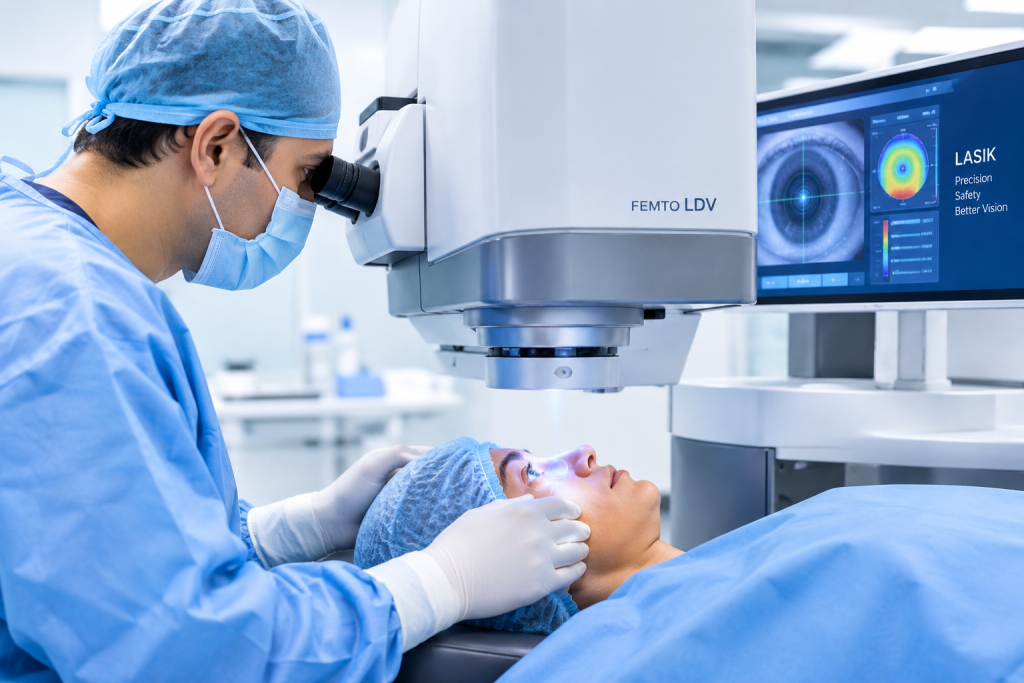
LASIK
LASIK is a laser vision-correction procedure used to correct refractive errors such as myopia, hyperopia and astigmatism. During LASIK, a laser reshapes the cornea so that light can focus more accurately on the retina, which may reduce dependence on glasses or contact lenses.
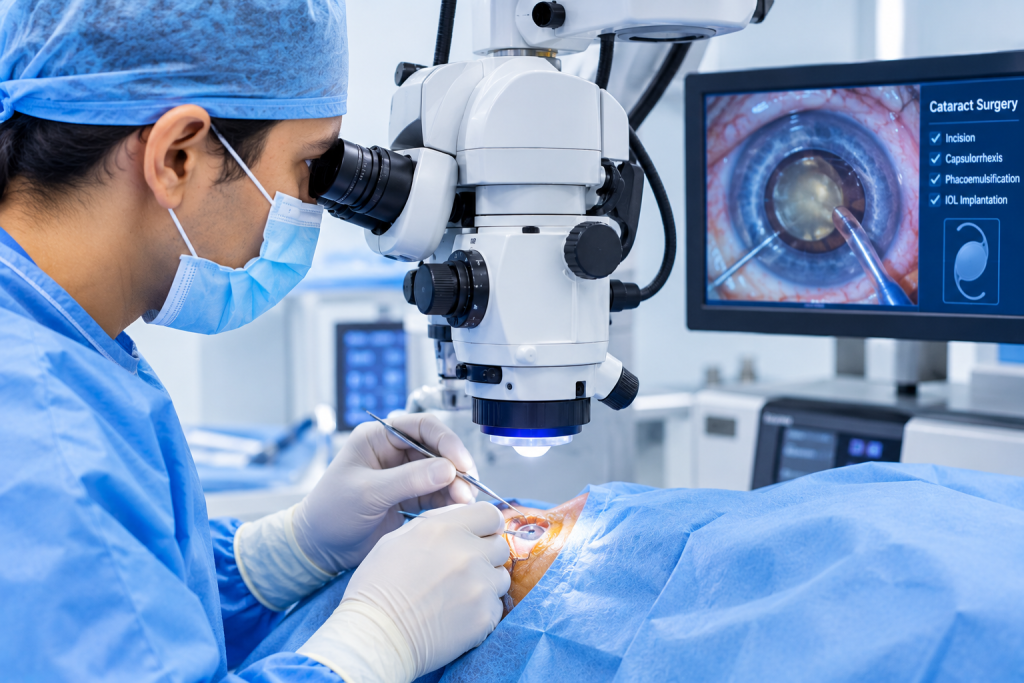
CATARACT
Cataract is a clouding of the eye’s natural lens that can cause blurry or hazy vision, faded colors, glare and difficulty seeing at night. Cataracts usually develop gradually and may begin to interfere with everyday activities such as reading, driving or watching TV.
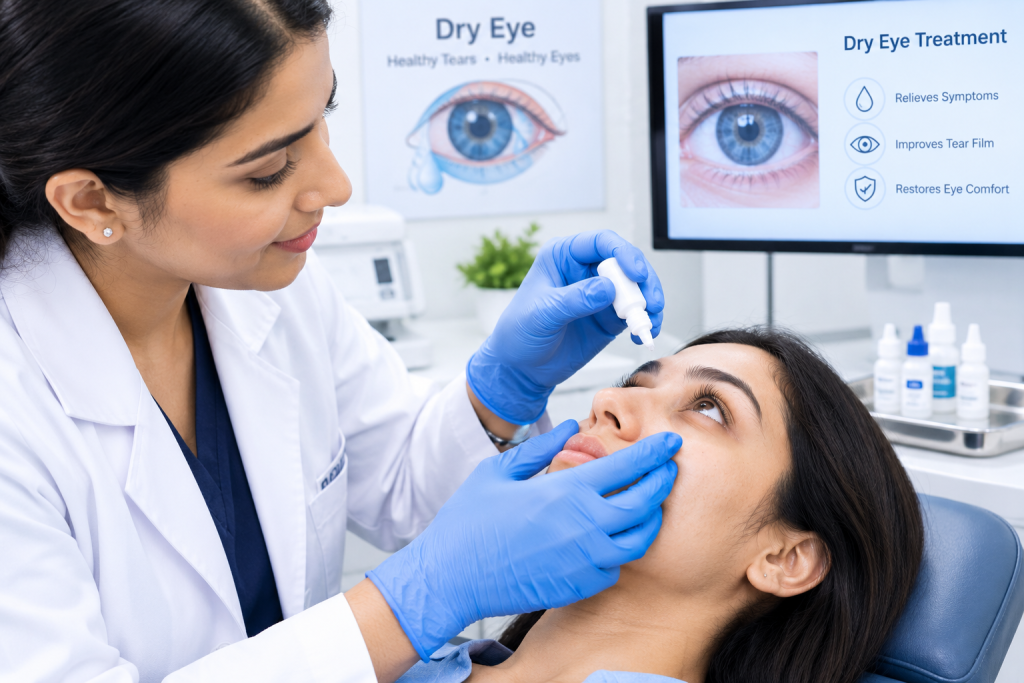
DRY EYE
Dry eye treatment focuses on relieving symptoms and addressing the underlying cause of inadequate or unstable tears. Depending on the condition, treatment may include artificial tears, prescription eye drops, lifestyle changes and other specialized treatments.
Frequently Asked Questions
Q1.Can glaucoma be cured?
Ans: There is currently no cure that reverses established glaucoma damage. However, treatment can often slow or stop further damage and help protect remaining vision.
Q2.Does glaucoma always cause high eye pressure?
Ans: No. High eye pressure is an important risk factor, but glaucoma can also occur with normal eye pressure.
Q3.Can glaucoma have no symptoms?
Ans: Yes. Early glaucoma often causes no noticeable symptoms, which is why regular eye examinations are important.
Q4.Can glaucoma cause blindness?
Ans: If glaucoma progresses without appropriate treatment, it can cause severe vision loss and blindness. Early detection and treatment can help protect vision.
Q5.Is glaucoma treatment lifelong?
Ans: Glaucoma commonly requires long-term monitoring and treatment. Your treatment plan may change depending on how your eye pressure, optic nerve and vision respond over time.