
LASIK eye surgery is a popular vision-correction procedure that uses a laser to reshape the cornea and help light focus more accurately on the retina. It can reduce dependence on glasses or contact lenses in suitable patients. One of the most common questions people ask before treatment is: How long does LASIK recovery take? For many patients, vision becomes noticeably clearer within the first 24–48 hours, and they can return to some routine activities relatively quickly. However, clear vision soon after surgery does not mean that the eyes have completed healing. Dryness, light sensitivity, glare and small changes in vision may continue for several weeks or months. Understanding the LASIK recovery timeline helps you plan your work, travel, exercise and follow-up appointments. It also helps you recognise which symptoms may occur during early healing and which need urgent medical attention. Dr. Ripan Kaur Kamra provides eye-care services in Hisar, Haryana. If you are considering laser vision correction, an individual eye examination can help determine whether LASIK is appropriate for your eyes and what recovery may involve.
Read here: LASIK Eye Surgery – Complete Guide
How Long Does LASIK Recovery Take?
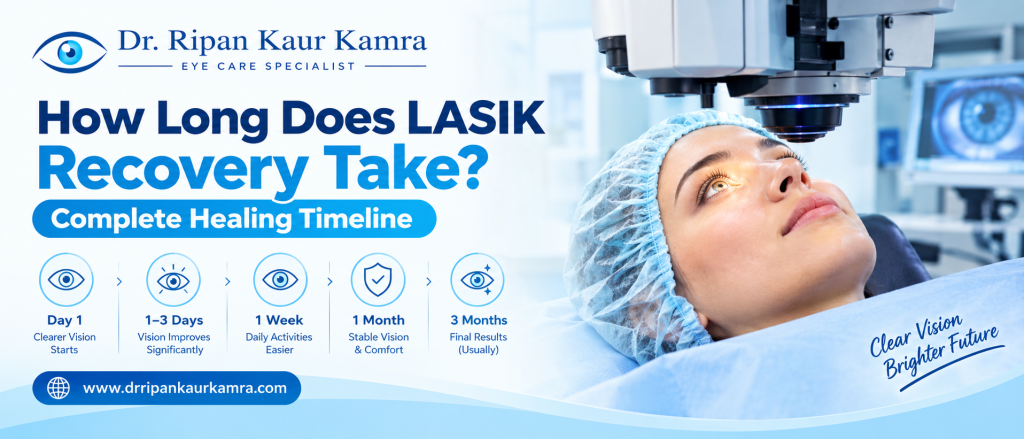
LASIK recovery happens in stages. Many patients notice improved vision by the next day, but the time required for complete healing and stable vision varies. A general overview is:
- First few hours: Temporary burning, watering, irritation or a gritty sensation may occur.
- First 24–48 hours: Vision often improves, and the surgeon checks healing during an early follow-up.
- First week: Many patients can resume routine activities according to their surgeon’s advice, although dryness or fluctuating vision may remain.
- First few weeks: Comfort and vision may continue to improve. Activity restrictions and prescribed drops must be followed.
- One to three months: Vision and the eye surface may continue to stabilise; some people need longer monitoring.
Dr. Ripan kaur notes that complete healing can take around two to three months. The exact LASIK healing time depends on individual healing, the amount of correction performed and whether complications or significant dry-eye symptoms develop.
LASIK Recovery Timeline: Day by Day
First 4–6 Hours After LASIK
Immediately after surgery, your eyes may feel irritated, watery, scratchy or as though something is present in them. Mild burning and light sensitivity can also occur. Vision may initially be hazy or blurry. Your surgeon may advise you to rest or take a nap after the procedure. Arrange for someone to take you home, and do not drive yourself. During these first hours:
- Keep your eyes closed and rest as advised.
- Do not rub, press or squeeze your eyes.
- Use prescribed eye drops according to the instructions.
- Wear the protective eye shield if your surgeon recommends it.
- Avoid unnecessary screen use if your eyes feel uncomfortable.
Severe pain or worsening vision is not something to simply wait out. Contact your surgeon promptly if symptoms become severe or worsen.
The First 24 Hours After LASIK
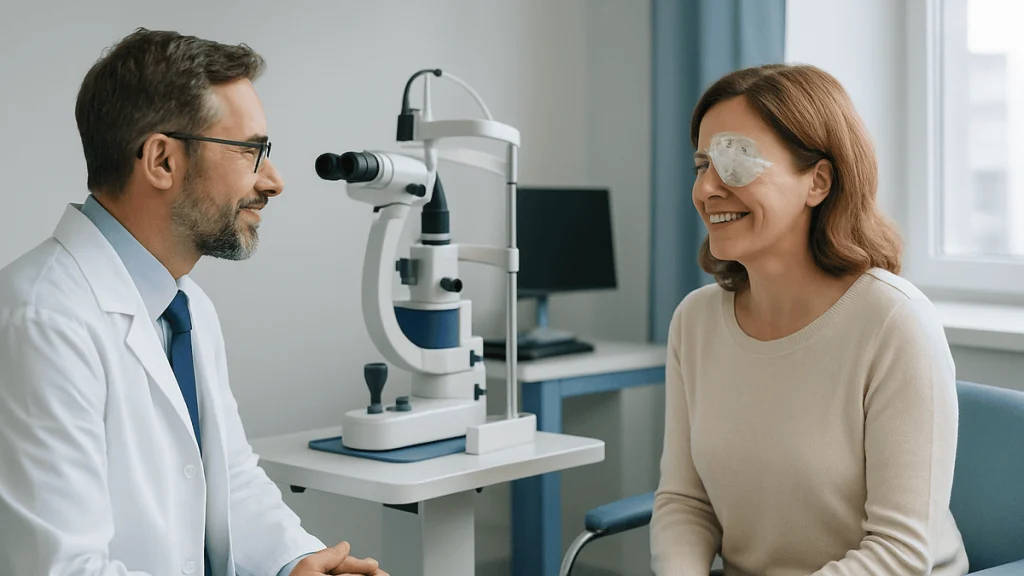
The first day is an important part of recovery. Many patients notice clearer vision by the following day, but some blurriness, dryness, glare or sensitivity to light can remain. Your ophthalmologist will usually arrange an early follow-up, often within 24–48 hours, to assess the eyes and check vision. During this period, follow your prescribed eye-drop schedule and wear your protective shield as directed. Avoid rubbing your eyes, applying eye makeup or using unapproved eye products. Do not drive until your surgeon confirms that your vision is adequate and it is safe for you to drive.
Days 2–7: Vision and Comfort Begin to Improve
During the first week, many patients find that everyday activities become easier. However, vision can still fluctuate, and dry eyes or sensitivity to bright light may continue. Some people return to desk work or routine activities within a day or two, while others need additional rest. Your occupation matters: office work is different from construction, dusty outdoor work or a job involving physical contact. Helpful habits during this stage include:
- Following the prescribed eye-drop plan.
- Attending your scheduled check-up.
- Taking screen breaks if your eyes become dry or tired.
- Wearing sunglasses outdoors when bright light is uncomfortable.
- Avoiding swimming, eye makeup and strenuous activities for the period advised by your surgeon.
Do not compare your recovery with another patient’s. Different eyes can heal at different rates.
Weeks 2–4: Continued Healing
During the next few weeks, comfort and vision may continue to improve. Some patients still experience dry eyes, glare around lights or changes in visual clarity, particularly in low-light conditions.Continue any prescribed lubricating drops or other medicines according to your surgeon’s instructions. Do not stop medication just because your eyes feel normal. You may gradually resume more activities when cleared by your ophthalmologist. Swimming, contact sports and activities that could cause an eye injury often require longer restrictions than routine daily tasks.
One to Three Months: Vision Stabilisation
Although many people notice improvement early, complete healing and visual stabilisation can take two to three months, and sometimes longer. During this stage, your surgeon may continue to monitor:
- Visual acuity and changes in prescription.
- Dryness and the condition of the eye surface.
- Glare, halos or night-vision difficulties.
- Any persistent or new symptoms.
Do not assume that fluctuating vision means the surgery has failed. Equally, do not ignore persistent or worsening symptoms. Your ophthalmologist can assess whether they are part of the healing process or need treatment.
What Factors Affect LASIK Healing Time?
There is no single recovery schedule that suits everyone. Several factors can influence LASIK recovery.
1. Your Eye Health Before Surgery
Pre-existing dry eye, eyelid inflammation or other eye conditions may affect comfort and recovery. A detailed preoperative examination helps identify concerns that may need treatment before LASIK.
2. The Amount of Vision Correction
The type and degree of refractive error being corrected can influence the recovery and stabilisation process. Your surgeon can explain what to expect based on your measurements and treatment plan.
3. Dry Eyes After LASIK
Dryness is a common symptom following LASIK. Patients may notice burning, grittiness, irritation or fluctuating clarity. Symptoms may improve over time, but some people need lubricating drops or additional treatment for longer.
Read here: Dry Eye Causes, Symptoms & Treatment
4. Following Post-LASIK Care Instructions
Rubbing the eyes, missing prescribed drops or returning to restricted activities too soon may put recovery at risk. Follow-up appointments allow your surgeon to check healing and adjust your care plan if needed.
5. Your Daily Environment and Work
Dust, smoke, dry indoor air, prolonged screen use and activities that expose the eyes to injury may affect comfort. Patients working in physically demanding or dusty environments may need specific advice before returning to work.
Post LASIK Care: Essential Tips for a Smooth Recovery
Proper post LASIK care helps protect your eyes while they heal. Follow your surgeon’s specific instructions, as recommendations may vary.
Use Prescribed Eye Drops Correctly
Your surgeon may prescribe antibiotic or anti-inflammatory drops and recommend artificial tears. Use each product at the recommended dose and for the instructed duration. Wash your hands before applying drops, avoid touching the bottle tip to the eye and ask your clinic how to space different medicines.
Never Rub Your Eyes
Rubbing can interfere with healing and may disturb the corneal flap. If your eyes itch or feel dry, use only the treatments recommended by your surgeon and ask for advice if symptoms persist.
Protect Your Eyes While Sleeping
Your surgeon may recommend a protective shield for the first night or for a longer period. Wear it as instructed to reduce the risk of accidental rubbing or pressure during sleep.
Limit Exposure to Water, Dust and Irritants
Follow the recommended restrictions for swimming, hot tubs, dusty environments and eye makeup. Be careful while washing your face or hair, and avoid getting unapproved products into your eyes.
Attend All Follow-Up Appointments
Early and later follow-ups help your ophthalmologist assess vision, corneal healing and dry-eye symptoms. Keep appointments even if you feel well.
Take Breaks During Screen Use
Screens do not automatically damage the results of LASIK, but prolonged use can make dryness and eye fatigue more noticeable. Blink regularly, take short breaks and use prescribed lubricating drops if advised.
Wear Sunglasses When Needed
Bright light may feel uncomfortable during early recovery. Comfortable sunglasses can help outdoors, but they do not replace your prescribed treatment or protective measures.
Read here: What to Avoid Before Eye Surgery
When Can You Return to Normal Activities After LASIK?
The timing depends on your healing and the nature of each activity. Use this table as a general guide, not as permission to restart an activity without your surgeon’s approval.
| Activity | General guidance |
| Reading or using a phone | Resume as comfortable; take breaks if eyes feel dry |
| Desk work | Many people return within a day or two, depending on comfort and job demands |
| Driving | Only after your surgeon confirms vision is adequate and driving is safe |
| Light exercise | Resume when cleared by your surgeon |
| Heavy workouts | Wait for your surgeon’s recommended period |
| Swimming and hot tubs | Avoid until your surgeon confirms it is safe |
| Eye makeup and creams near the eyes | Wait for the period recommended by your surgeon |
| Contact sports | Avoid until your surgeon clears you |
| Dusty or high-risk work | Ask your surgeon when it is safe to return and whether protection is needed |
Do not use a generic timeline instead of your own postoperative instructions. The appropriate timing can differ based on your procedure, healing and risk of eye injury.
Common Symptoms During Recovery After LASIK
Some temporary symptoms can occur during recovery after LASIK. They should generally improve rather than become progressively worse.
Dryness and a Gritty Sensation
The eyes may feel dry, scratchy or irritated. Your surgeon may recommend artificial tears or other treatment. Persistent dryness deserves assessment, particularly if it affects vision or daily comfort.
Blurred or Fluctuating Vision
Vision may be hazy at first and may vary during the early healing period. If it suddenly worsens, becomes persistently poorer or is accompanied by significant pain, contact your surgeon urgently.
Glare, Halos and Light Sensitivity
Some patients notice halos around lights, glare or difficulty seeing at night. These symptoms may improve as the eyes heal, but persistent or troublesome symptoms should be discussed at follow-up.
Mild Redness or Watering
Temporary watering or mild irritation can occur. Increasing redness, significant pain or new symptoms require prompt medical advice rather than self-treatment.
When Should You Contact Your Eye Surgeon?
Seek urgent medical advice if you experience:
- Severe or increasing eye pain.
- Sudden loss of vision or worsening vision.
- Increasing redness or marked light sensitivity.
- New flashes, a sudden increase in floaters or double vision.
- An eye injury followed by pain, blurred vision or watering.
- Any new or unusual symptom that concerns you.
Do not wait until your next routine appointment if symptoms are severe or worsening. Early assessment is important because some complications need prompt treatment.
Frequently Asked Questions About LASIK Recovery
1. How long does LASIK recovery take?
Many patients notice clearer vision within 24–48 hours, but complete healing and visual stabilisation can take two to three months or longer. Individual recovery varies.
2. Can I see clearly the day after LASIK?
Many patients experience improved vision by the next day. However, blurry or fluctuating vision can persist, so your surgeon should confirm that recovery is progressing as expected.
3. How many days should I take off work after LASIK?
Some patients return to desk work within a day or two. The appropriate time off depends on comfort, visual clarity and whether your job involves dust, heavy physical activity or risk of eye injury.
4. When can I use my mobile or laptop after LASIK?
You may be able to use screens when comfortable, but take breaks if you experience dryness or fatigue. Follow your surgeon’s advice, especially during the first day of recovery.
5. Is dry eye normal after LASIK?
Dry-eye symptoms are common after LASIK. They may improve over time, but some patients need lubricating drops or further evaluation. Seek advice if symptoms persist or worsen.
6. When can I drive after LASIK?
Do not drive immediately after surgery. Resume driving only after your surgeon confirms that your vision is adequate and you can drive safely.
7. When can I exercise after LASIK?
The timing depends on the type of exercise and your recovery. Gentle activities may resume earlier than contact sports, swimming or intense workouts. Ask your surgeon for a personalised timeline.
8. Can I swim after LASIK?
Avoid swimming and hot tubs until your surgeon confirms it is safe. Water exposure may pose risks during the healing period, and the recommended restriction varies.
9. Why is my vision blurry several weeks after LASIK?
Possible reasons include dryness, ongoing visual stabilisation or other eye conditions. Arrange an assessment if blur persists, worsens or concerns you; sudden worsening needs urgent attention.
10. When will I know my final LASIK result?
Your vision may improve quickly, but final stabilisation can take a few months. Your surgeon will monitor your progress and explain whether further assessment is needed.
Conclusion: Understand Your LASIK Recovery Timeline
LASIK recovery is often relatively quick in the early stages, with many patients noticing clearer vision within a day or two. However, LASIK healing time is not the same for everyone, and full healing and visual stabilisation may take two to three months or longer. The most important steps are to use prescribed eye drops correctly, avoid rubbing your eyes, follow activity restrictions, attend follow-up appointments and seek help if symptoms worsen. Do not rush back into swimming, contact sports or other activities that could injure your eyes. If you are considering LASIK or have questions about recovery after LASIK, a comprehensive eye examination can help you understand your options and the care you may need.