
Your eyes play an important role in almost every part of daily life, from reading and driving to working on a computer and recognising familiar faces. However, many people visit an eye doctor only when their vision becomes blurry or they start experiencing discomfort. Regular eye checkups are important because some eye conditions can develop gradually without obvious symptoms. So, how often should you get an eye check-up? The answer depends on your age, medical history, family history, vision needs, and risk of eye disease. Some people may need an examination every few years, while others may require annual or more frequent visits. A comprehensive eye examination does more than check whether you need glasses. Depending on your needs, it may assess visual clarity, eye pressure, the retina, the optic nerve, and other structures of the eye. In this guide, you will learn how often to schedule a routine eye checkup, what happens during an eye test, which people need more frequent examinations, and when you should seek urgent eye care.
Why Is a Regular Eye Checkup Important?
A routine eye checkup helps assess your vision and identify eye problems that may not cause noticeable symptoms in their early stages. It can also help your eye-care professional determine whether your glasses prescription has changed or whether further testing is needed.
1. Detect Eye Conditions Early
Certain eye conditions, including glaucoma and diabetic retinopathy, can develop without obvious early warning signs. An appropriate examination can help detect signs of these conditions before you notice a significant change in vision. Early detection does not guarantee that every condition can be prevented, but it can allow timely monitoring and treatment where appropriate.
2. Check Your Vision Clearly
If you frequently squint, hold your phone close to your face, struggle to read signs, or experience headaches during reading, your prescription may need to be reviewed. An eye test can assess how clearly you see at different distances and whether glasses or another form of vision correction may help.
3. Monitor Existing Eye Conditions
People with glaucoma, diabetic eye disease, cataracts, retinal conditions, or other diagnosed problems may need regular follow-up appointments. The purpose is to monitor changes and assess whether treatment needs adjustment.
4. Review Eye Health as You Age
Age can influence the likelihood of developing conditions such as cataracts, glaucoma, and age-related macular degeneration. Regular examinations help your eye doctor assess age-related changes and recommend an appropriate follow-up schedule. Dr. Ripan Kaur explains why comprehensive dilated eye examinations are important for detecting eye diseases early.
How Often Should You Get an Eye Check-Up?
There is no single schedule that suits everyone. Recommendations differ among professional organisations and depend on whether a person has symptoms or risk factors. The following age-based intervals are based on American Academy of Ophthalmology guidance for adults who have no symptoms and no known risk factors for eye disease. They are general reference points, not a substitute for an individual recommendation from your eye doctor.
| Age group | General examination interval for low-risk adults |
| Under 40 years | Every 5–10 years |
| 40–54 years | Every 2–4 years |
| 55–64 years | Every 1–3 years |
| 65 years and older | Every 1–2 years |
These intervals refer to comprehensive medical eye examinations, not necessarily to glasses checks or every type of vision screening. Other professional guidance may recommend more frequent routine examinations. Your personal risk, symptoms, and local clinical advice should determine the schedule you follow. Important: If you have diabetes, glaucoma risk factors, a family history of eye disease, existing eye conditions, or new symptoms, you may need an examination more frequently than the intervals shown above.
Eye Checkups for Children
Children need age-appropriate vision screening and eye examinations because vision problems can affect reading, learning, sports, and development. A child’s schedule should take account of their age, development, screening results, symptoms, and family history. If a child has a failed vision screening, squints frequently, holds objects unusually close, or struggles to see clearly, arrange an eye assessment rather than waiting for the next routine appointment. School screening can be useful, but it does not replace a comprehensive eye examination when one is recommended.
Eye Checkups for Teenagers and Young Adults
Teenagers and young adults may need examinations to review refractive errors, glasses or contact lens prescriptions, and any symptoms affecting their studies or screen use. People who wear contact lenses, have rapidly changing prescriptions, or experience frequent headaches or blurry vision may need more frequent reviews. If you are studying or working long hours on digital devices, do not assume every visual symptom is caused by screen use. An examination can help identify other contributing factors.
Eye Checkups After the Age of 40
After 40, some people begin experiencing difficulty focusing on close objects, commonly associated with age-related changes in the eye’s focusing ability. Other eye conditions also become more common with age. A comprehensive examination can assess your vision and eye health and help establish a baseline for future comparisons. Your eye doctor can recommend how often to return based on your findings and risk factors.
Eye Checkups After the Age of 60
Older adults may have a higher risk of cataracts, glaucoma, retinal conditions, and other vision problems. A regular eye examination can help detect and monitor these conditions. Do not wait for significant vision loss before arranging an appointment. Some eye diseases progress gradually, and early symptoms may be difficult to notice.
Who Needs More Frequent Eye Examinations?
Some people need more frequent appointments regardless of age. Your eye doctor may recommend an annual examination, a shorter interval, or condition-specific monitoring.
1. People With Diabetes
Diabetes can damage the small blood vessels in the retina and cause diabetic retinopathy. This condition may develop before a person notices changes in vision. People with diabetes should follow the eye-examination schedule recommended by their treating clinician. Many need a dilated retinal examination at least once a year, although the appropriate interval depends on the type of diabetes, examination findings, and clinical circumstances. Do not skip an examination simply because your vision seems normal.
2. People With High Blood Pressure
High blood pressure can affect blood vessels throughout the body, including those in the eyes. Your doctor may recommend an eye examination based on your blood pressure, medical history, symptoms, and other risk factors. If you have high blood pressure alongside diabetes or an existing eye condition, make sure your eye-care professional knows about it.
3. People With a Family History of Eye Disease
A family history of glaucoma or certain inherited eye conditions may increase your risk. Tell your eye doctor which relatives have been affected and, if possible, the condition they were diagnosed with. Your doctor can use this information to decide whether earlier or more frequent examinations are appropriate.
4. People Who Already Have an Eye Condition
If you have glaucoma, diabetic retinopathy, macular degeneration, or another diagnosed condition, your follow-up schedule should be based on the condition’s severity, treatment, and stability. Some people require examinations every few months or even sooner when a condition is active. Others may need less frequent reviews when the disease is stable. Follow the interval provided by your treating eye specialist rather than using a general age-based schedule.
5. People Who Wear Contact Lenses
Contact lens wearers may need regular checks to assess vision, lens fit, eye surface health, and whether the lenses remain suitable. Pain, significant redness, light sensitivity, or blurred vision while wearing contact lenses requires prompt medical assessment. Remove the lenses and seek urgent advice rather than waiting for a routine appointment.
Read here: Common Causes of Red Eyes
6. People With Previous Eye Surgery
After procedures such as cataract surgery or LASIK, follow-up appointments are scheduled according to the procedure and the individual’s recovery. Once the immediate recovery period has passed, ongoing routine eye examinations may still be needed. Previous surgery does not eliminate the possibility of developing other eye conditions later.
Read here: When Is Cataract Surgery Needed?
What Happens During a Routine Eye Checkup?
A routine eye checkup can include several assessments. The exact tests depend on your age, symptoms, medical history, and the purpose of your visit.
1. Medical and Vision History
Your eye-care professional may ask about your current vision, previous eye problems, glasses or contact lens use, medications, medical conditions, and family history. Tell the doctor about headaches, eye pain, dryness, blurred vision, flashes, floaters, or any recent change in how you see.
Read here: Dry Eye Causes, Symptoms and Treatment
2. Visual Acuity Test
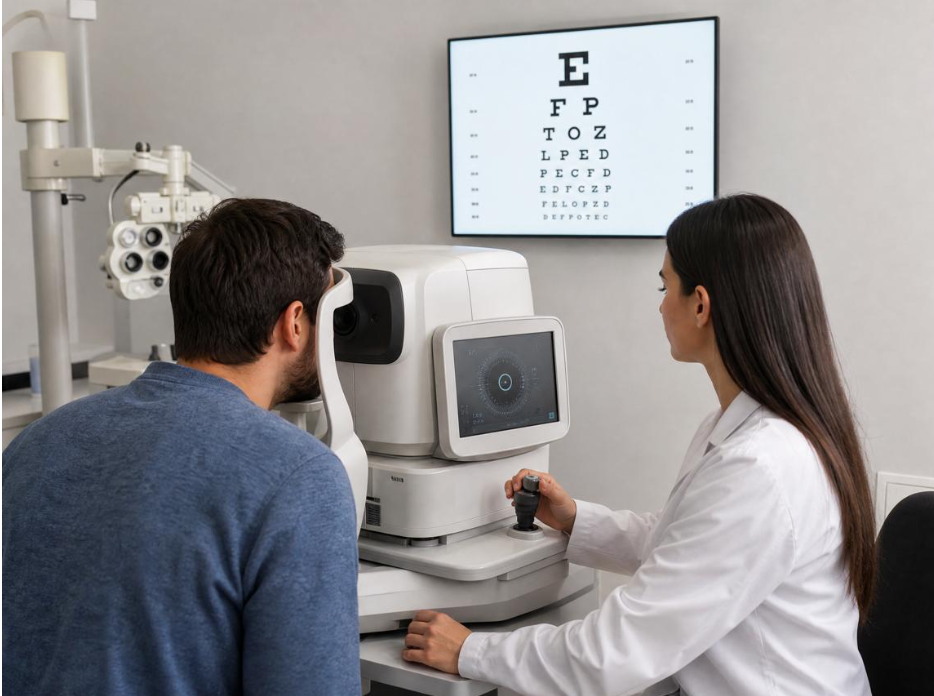
A visual acuity test checks how clearly you can see letters, symbols, or other targets at a particular distance. You may be asked to read a chart with one eye at a time and then with both eyes. This helps assess visual clarity but does not, on its own, rule out all eye diseases.
3. Refraction and Prescription Check
If needed, the doctor or vision-care professional assesses whether glasses or contact lenses may improve your vision. This helps determine the appropriate prescription for your visual needs. A prescription check is useful, but it is not always equivalent to a comprehensive medical eye examination.
4. Eye Pressure Measurement
Tonometry measures pressure inside the eye. It is one of the assessments that may be used when evaluating glaucoma risk. Eye pressure alone cannot confirm or rule out glaucoma. The doctor considers it alongside the optic nerve, visual field, medical history, and other examination findings.
5. Examination of the Eye’s Structures
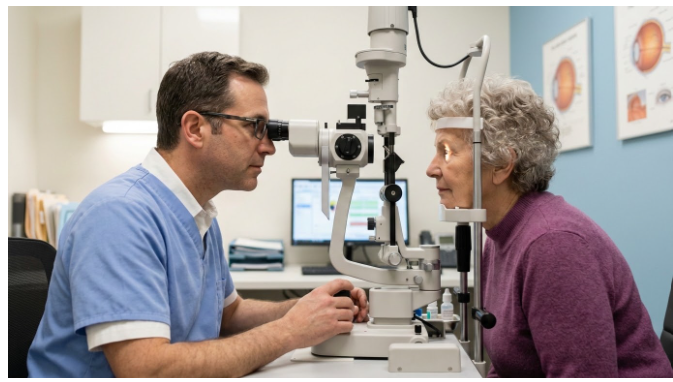
Depending on the visit, the doctor may use a slit-lamp microscope to examine structures such as the cornea, iris, lens, and other parts of the front of the eye. A dilated eye examination may also be recommended to assess the retina and optic nerve. Special eye drops temporarily widen the pupils, allowing the doctor to examine the back of the eye more thoroughly.
6. Additional Tests When Necessary
Some people need visual field testing, retinal imaging, optical coherence tomography, or other specialised tests. These may be used to investigate symptoms or monitor a diagnosed condition. Not every patient needs every test. Your eye doctor will select tests based on your individual needs.
What Is the Difference Between an Eye Test and an Eye Examination?
The terms are sometimes used interchangeably, but they can describe different levels of assessment.
Eye Test
An eye test may refer to a vision screening or a refraction assessment to determine how clearly you see and whether you need a glasses prescription. A screening can identify possible problems, but it may not assess every part of the eye or detect all eye diseases.
Comprehensive Eye Examination
A comprehensive eye examination assesses vision and relevant aspects of eye health. Depending on your needs, it may include an examination of the eye structures, pressure measurement, pupil assessment, and a dilated retinal examination. If your goal is to monitor your overall eye health.