
Cataract surgery is a common eye procedure.
It is performed when the natural lens becomes cloudy and affects vision. During cataract surgery, the cloudy natural lens is removed and replaced with an artificial lens called an intraocular lens (IOL). The purpose of the procedure is to improve vision affected by the cataract and help patients return to their normal activities with clearer sight. For anyone considering a cataract operation, understanding the complete process—from pre-surgery evaluation to recovery and expected results—can make the decision easier. This guide explains what happens before, during and after cataract surgery, what recovery may feel like, the possible risks and what you can realistically expect from the results.
Who May Consider Cataract Surgery?
Cataract surgery is considered when the cataract is causing vision problems that interfere with a person’s daily life or when the ophthalmologist identifies another clinical reason for removing the cataract. Common concerns may include:
- Blurred or cloudy vision
- Difficulty reading
- Difficulty seeing while driving
- Increased glare from lights
- Difficulty seeing at night
- Faded or less vibrant colours
- Frequent changes in glasses prescription
- Difficulty performing work or hobbies
- Vision that remains unsatisfactory despite updated glasses
The decision depends on a detailed eye examination.
Your symptoms and overall eye health are also important.
Your ophthalmologist will discuss the expected benefits and risks.
Cataract Surgery Procedure: Step-by-Step
Understanding the cataract surgery procedure can help reduce uncertainty about what happens on the day of treatment.
1. Comprehensive Eye Examination
Before surgery, the ophthalmologist performs a detailed examination of the eyes.
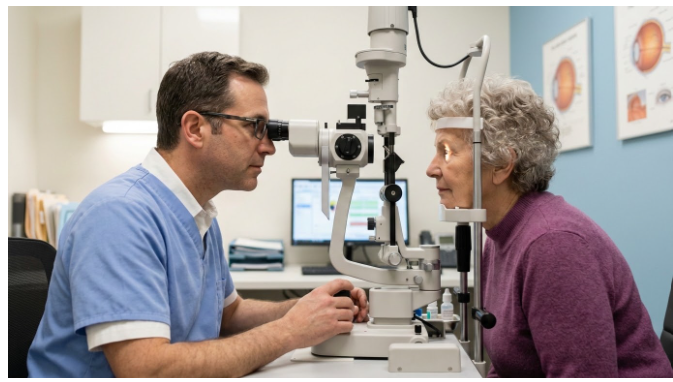
The evaluation may include assessment of:
- Cataract severity
- Cornea
- Retina
- Optic nerve
- Eye pressure
- Existing eye conditions
- Overall visual potential
Your ophthalmologist will take eye measurements.
These measurements help determine the appropriate IOL power. This evaluation is important because cataract may not be the only condition affecting vision. For example, glaucoma, retinal disease or other eye conditions may also influence the final visual outcome.
2. Discussing the Intraocular Lens
One of the important decisions before cataract surgery is selecting an appropriate intraocular lens or IOL. An IOL replaces the cloudy natural lens removed during surgery. Your ophthalmologist may discuss different IOL options.
The choice depends on your eye measurements, lifestyle and visual needs.
Common IOL Considerations
IOL selection can involve factors such as:
- Distance vision requirements
- Near-vision requirements
- Astigmatism
- Existing eye conditions
- Lifestyle
- Expectations regarding glasses
There is no single IOL that is ideal for every patient. The appropriate choice should be discussed with the ophthalmologist after a complete eye evaluation.
3. Preparing the Eye
On the day of the cataract operation, the eye is prepared carefully for surgery. The pupil may be dilated, the eye and surrounding area are cleaned, and sterile precautions are followed. Cataract surgery is commonly performed using local anaesthesia, allowing the patient to remain awake while the eye is numbed. Some patients may see lights or movement during the procedure, but the surgical area is carefully managed to maintain comfort.
4. Removing the Cloudy Lens
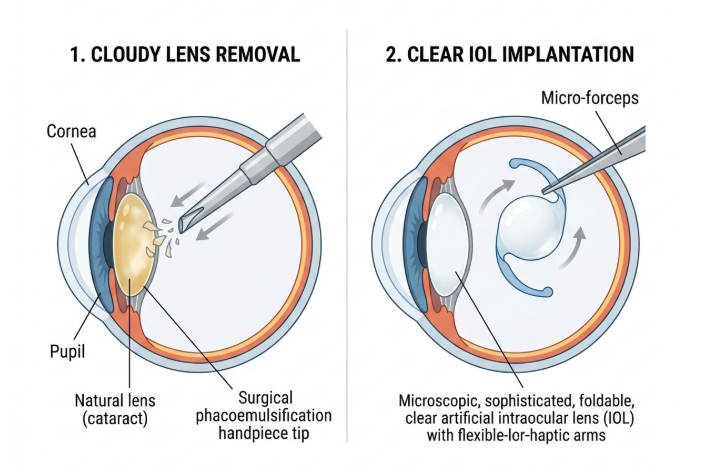
The surgeon makes a small opening in the eye and accesses the cloudy natural lens. In modern cataract surgery, a technique called phacoemulsification is commonly used. Ultrasound energy is used to break the cloudy lens into smaller pieces, which are then removed from the eye. The exact surgical technique can vary depending on the patient’s eye and the surgeon’s assessment.
5. Implanting the IOL
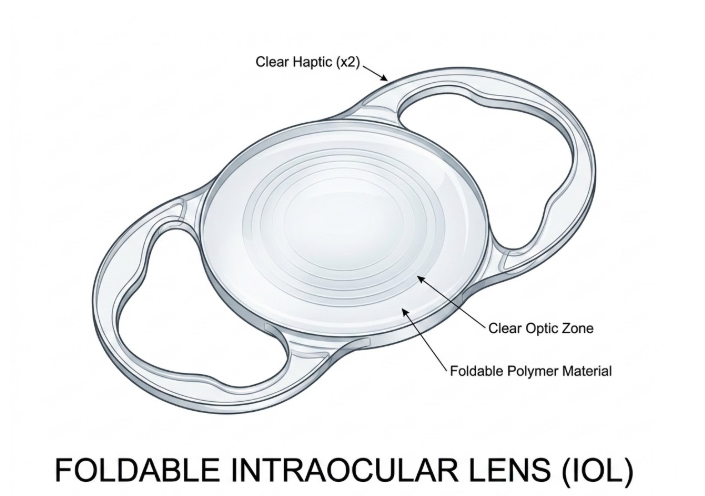
After the cloudy lens has been removed, the selected artificial intraocular lens is placed inside the eye. The IOL is positioned to provide the intended optical correction. In many cases, the incision is designed to seal naturally without stitches, although the exact approach depends on the individual surgical situation.
6. Immediate Post-Surgery Observation
After the cataract procedure, the patient usually spends a short period in a recovery area. The medical team checks the eye and provides instructions regarding eye drops, eye protection and activities during recovery. Patients generally return home the same day, but they should arrange transportation rather than driving themselves home.
Is Cataract Surgery Painful?
Cataract surgery is generally performed with anaesthesia to prevent significant pain during the procedure. Patients may notice pressure, light or movement rather than sharp pain. After surgery, mild irritation, watering, sensitivity to light or a gritty feeling may occur while the eye heals. These symptoms generally improve as recovery progresses. Severe or persistent pain after surgery should not be ignored and requires prompt medical assessment.
Cataract Surgery Recovery: What to Expect
Recovery is an important part of successful cataract treatment. Every patient’s recovery is different, and the exact timeline depends on individual healing, eye health and the type of surgery performed.
First 24 Hours
During the first day, it is possible to experience:
- Blurry vision
- Mild discomfort
- Watering
- Light sensitivity
- Mild redness
- A gritty or itchy sensation
Your ophthalmologist may prescribe eye drops and recommend an eye shield or protective glasses. Do not rub or press on the operated eye.
First Few Days
Vision may gradually become clearer during the first several days. However, healing continues even when vision begins to improve. After surgery, vision may gradually become clearer during the first few days. In addition, you may need to continue prescribed eye drops. For example, you may need to avoid swimming until your doctor says it is safe.
First Few Weeks
During the following weeks, your eye continues to heal.
During this time, you may need to:
- Continue prescribed eye drops
- Attend follow-up appointments
- Protect the eye while sleeping if advised
- Avoid rubbing the eye
- Avoid heavy lifting temporarily
- Follow instructions regarding exercise
- Avoid swimming until your doctor says it is safe
- Avoid driving until your vision meets the required standard
NHS guidance notes that eye drops are commonly used for several weeks and that activities such as driving, heavy lifting and swimming should be resumed according to medical advice.
How Long Does Cataract Surgery Recovery Take?
Many people notice improvement relatively soon after surgery, but complete healing takes longer. The National Eye Institute notes that most people are completely healed around 8 weeks after surgery, although individual recovery varies. Your ophthalmologist will monitor your recovery during follow-up appointments and determine when you can safely return to particular activities.
What Results Can You Expect After Cataract Surgery?
One of the main goals of cataract surgery is to improve vision affected by the cloudy lens. The National Eye Institute reports that approximately 9 out of 10 people see better after cataract surgery, although the final result depends on the health of the eye and other existing conditions. Some people notice that colours appear brighter after surgery because the artificial lens does not have the yellow or brown tint that can develop in a cloudy natural lens. However, cataract surgery does not guarantee perfect vision or complete freedom from glasses. You may still require glasses for certain activities after surgery.
Why Doesn’t Everyone Get the Same Result?
The final visual outcome depends on more than just removing the cataract. Other factors may include:
Retinal Health
Conditions affecting the retina can limit visual improvement.
Glaucoma
Damage to the optic nerve from glaucoma may continue to affect vision even after the cataract is removed.
Diabetic Eye Disease
Diabetic retinopathy can affect visual potential.
Corneal Conditions
Problems involving the cornea may also influence postoperative vision.
Age-Related Macular Changes
Macular conditions can limit central vision even after successful cataract surgery. The American Academy of Ophthalmology notes that cataract surgery cannot restore vision already lost because of other eye diseases such as glaucoma, macular degeneration or diabetic retinopathy.
Cataract Surgery Risks and Possible Complications
Although cataract surgery is generally considered safe and effective, every surgical procedure carries potential risks. Possible complications include:
- Infection
- Bleeding
- Inflammation
- Increased eye pressure
- Retinal detachment
- Swelling affecting vision
- Problems involving the position of the IOL
- Posterior capsule opacification
- Rarely, significant or permanent vision loss
The exact risk depends on factors such as overall eye health, other medical conditions and the complexity of the individual case. A detailed discussion with your ophthalmologist before surgery is important so that you understand the benefits, limitations and potential complications relevant to your eyes.
What Is Posterior Capsule Opacification?
Some patients experience cloudy vision again after cataract surgery. This does not mean that the cataract has grown back. A condition called posterior capsule opacification (PCO) can occur when cells cause the capsule behind the implanted IOL to become cloudy. PCO can occur weeks, months or even years after cataract surgery. When clinically appropriate, it can generally be treated using a laser procedure called YAG laser capsulotomy.
When Should You Contact Your Eye Doctor After Surgery?
Some mild discomfort and temporary vision changes can occur during normal recovery. However, contact your eye doctor promptly if you experience:
- Sudden loss of vision
- Severe or persistent eye pain
- Significant increase in redness
- New flashes of light
- A sudden increase in floaters
- A curtain or shadow across your vision
- Significant discharge
- Vision that suddenly becomes much worse
These symptoms can indicate a complication that requires urgent assessment.
Cataract Surgery: What Should You Ask Your Ophthalmologist?
Before choosing cataract surgery, consider asking:
About the Procedure
- Which cataract surgery technique is suitable for my eye?
- How long will the procedure take?
- What type of anaesthesia will be used?
About the IOL
- Which IOL options are suitable for me?
- Will I still need glasses?
- Can my astigmatism be addressed?
About Recovery
- How long should I take off work?
- When can I drive?
- When can I exercise?
- When can I swim?
- How long will I need eye drops?
About Results
- What visual improvement can I reasonably expect?
- Do I have another eye condition that could affect the result?
- What are the risks specific to my eyes?
Having an open discussion with your ophthalmologist can help you make an informed treatment decision.
Why Choosing the Right Cataract Surgeon Matters
Cataract surgery involves more than simply removing a cloudy lens. A complete treatment journey includes:
Accurate Diagnosis → Detailed Eye Evaluation → IOL Planning → Surgical Treatment → Postoperative Care → Follow-Up
An ophthalmologist evaluates the complete health of your eyes before recommending surgery and helps determine an appropriate treatment approach.