
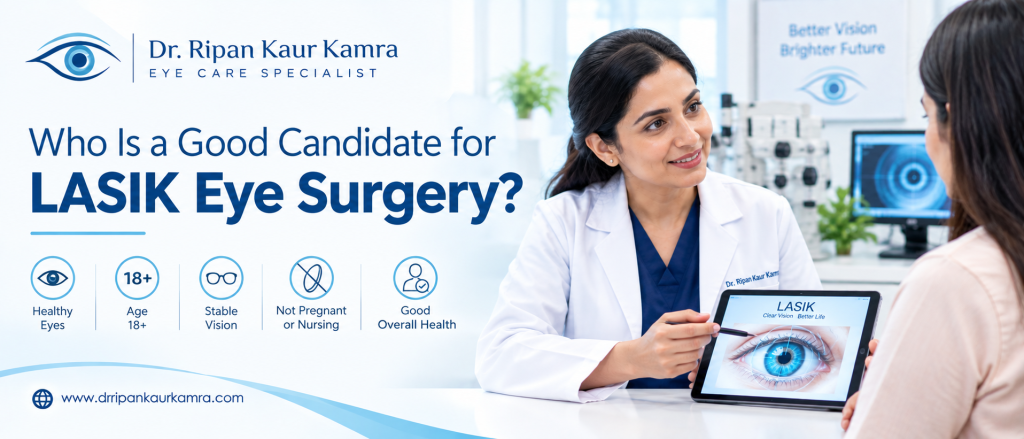
If you wear glasses or contact lenses, you may have wondered whether LASIK eye surgery could help reduce your dependence on them. LASIK is a type of refractive surgery that reshapes the cornea to correct certain vision problems, including myopia, hyperopia and astigmatism. However, simply having a glasses prescription does not automatically make someone a suitable LASIK candidate. LASIK eligibility depends on several factors, including your age, prescription stability, corneal shape and thickness, eye health, tear-film condition, medical history and expectations about the results. A comprehensive eye examination is therefore an essential part of deciding whether LASIK is appropriate. If you are considering laser vision correction, understanding these factors can help you prepare for a consultation and have a more informed discussion with your ophthalmologist.
What Does LASIK Eligibility Mean?
LASIK eligibility refers to whether a person’s eyes and overall circumstances are suitable for undergoing LASIK safely and achieving a reasonable visual outcome. There is no single glasses prescription, age or online test that can determine candidacy. Your ophthalmologist needs to assess the condition of your eyes and determine whether:
- Your refractive error is suitable for the available treatment
- Your prescription is stable
- Your corneas have appropriate shape and thickness
- Your eyes are sufficiently healthy
- Dry eye or ocular-surface problems are controlled
- You understand the possible benefits and limitations
- Your expectations are realistic
The final decision should be made after a detailed examination rather than based only on your current glasses number.
Who Can Get LASIK?
A person may be considered for LASIK when several important criteria are satisfied. Let’s look at the major factors individually.
1. Age Matters for LASIK Candidacy
Age is one of the factors considered during LASIK evaluation. LASIK is generally considered for adults rather than children because refractive prescriptions can continue changing during the teenage years and early adulthood. Specific age requirements can also depend on the particular laser platform and regulatory approval. The American Academy of Ophthalmology’s current guidance notes that surgery is typically deferred until after age 21 because of ongoing refractive changes, while there is not necessarily an upper age limit if the eyes are otherwise healthy.
What About Older Adults?
Being older does not automatically mean that LASIK is impossible. However, age-related eye changes become increasingly important. For example, presbyopia commonly develops with age and affects the ability to focus on nearby objects. LASIK does not eliminate presbyopia. An older patient may therefore need to discuss whether LASIK, another refractive procedure or a lens-based treatment is more appropriate.
2. Your Glasses Prescription Should Be Stable
One of the most important LASIK requirements is a stable refractive prescription. If your glasses or contact lens prescription has changed significantly recently, it may indicate that your eyes are still undergoing refractive changes. The FDA advises patients to consider whether their prescription has changed within the previous year when assessing candidacy. Current AAO guidance describes refractive stability over approximately 1–2 years as an important part of pre-operative evaluation.
Why Is Prescription Stability Important?
LASIK permanently reshapes the cornea based on measurements taken before surgery. If your prescription is still changing, the result may not remain as expected. Your ophthalmologist may therefore review previous prescriptions or perform repeat measurements before confirming treatment.
3. Healthy Corneas Are Essential
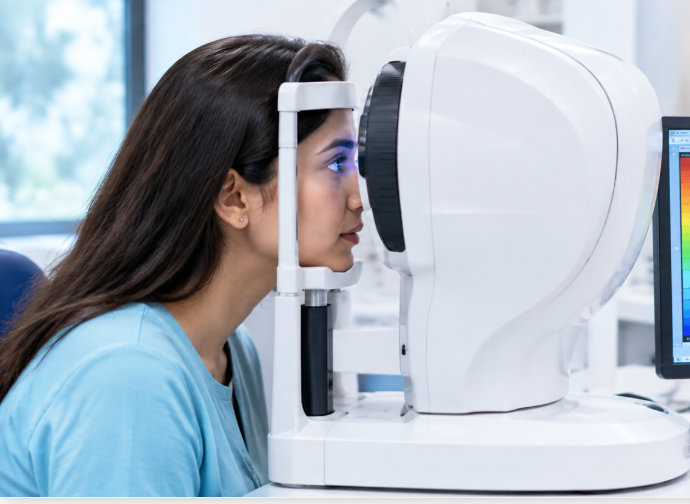
The cornea is the transparent front surface of the eye and plays an important role in focusing light. Because LASIK reshapes corneal tissue, the health and structure of the cornea are particularly important. Your doctor may evaluate:
- Corneal thickness
- Corneal curvature
- Corneal topography
- Corneal tomography
- Irregular astigmatism
- Signs of corneal weakness
- Previous corneal disease or injury
Abnormal corneal shape, keratoconus and insufficient corneal thickness can increase the risk of complications and may make LASIK inappropriate.
What Is Corneal Mapping?
Corneal mapping creates detailed information about the shape and structure of your cornea. This testing is especially important because an abnormal corneal shape can increase the risk of unpredictable results or post-operative corneal problems. Therefore, corneal mapping is an important part of LASIK candidate evaluation, not simply an optional extra test.
4. Your Eyes Should Be Free From Certain Active Conditions
Good overall eye health is an important part of LASIK eligibility. Certain conditions may increase surgical risk or need to be treated before refractive surgery is considered. These can include:
- Active eye infection
- Significant dry eye
- Keratoconus
- Certain corneal abnormalities
- Uncontrolled glaucoma
- Visually significant cataract
- Certain forms of eye inflammation
- Some ocular-surface diseases
The NEI specifically lists conditions such as keratoconus, eye infection, dry eye, glaucoma and cataract among problems that can affect whether LASIK is appropriate.
5. Dry Eye Can Affect LASIK Eligibility
Dry eye deserves special attention before LASIK. Some people already have dry-eye symptoms without realizing how significant they are. Symptoms may include:
- Burning
- Stinging
- Gritty sensation
- Redness
- Excessive watering
- Fluctuating vision
- Contact lens discomfort
Because LASIK can temporarily worsen dry-eye symptoms, your ophthalmologist may evaluate your tear film and ocular surface before surgery.
Can Someone With Dry Eye Have LASIK?
It depends on the severity and control of the condition. A patient with mild or treatable dry eye may first receive appropriate treatment and then undergo another evaluation. Severe or uncontrolled dry eye may make LASIK inappropriate. This is why treating the ocular surface before making a final decision can be important.
6. Your Prescription Should Fall Within a Suitable Treatment Range
LASIK can correct several types of refractive error, but every laser platform has specific approved treatment ranges. LASIK may be used for certain levels of:
Myopia
Difficulty seeing distant objects clearly.
Hyperopia
Difficulty focusing clearly on nearby objects and, depending on the degree, distance vision.
Astigmatism
Blurred or distorted vision caused by an irregular curvature of the cornea or lens. The exact range that can be treated depends on the patient’s measurements and the specific laser system being used. Therefore, there is no universal “maximum eye number” that applies to every LASIK patient.
7. Your Overall Health Can Matter
LASIK is an eye procedure, but your general health and medications may also be relevant. Certain systemic conditions can affect healing or surgical suitability. Your ophthalmologist may ask about:
- Autoimmune conditions
- Diabetes and blood-sugar control
- Medications
- Previous surgeries
- Healing problems
- Allergies
- Current pregnancy or breastfeeding
Some medical conditions and medications may require additional assessment or may make LASIK inappropriate at a particular time. This does not mean that every person with a medical condition is automatically excluded. The decision depends on the individual circumstances.
8. Pregnancy and Breastfeeding May Affect Timing
Pregnancy and breastfeeding can be associated with temporary changes in refraction and the ocular surface. Because LASIK depends on accurate measurements and stable vision, your ophthalmologist may recommend postponing surgery until these changes have settled. The timing should be discussed directly with your eye specialist.
9. Your Lifestyle Can Influence the Procedure Choice
LASIK candidacy is not determined only by medical measurements. Your lifestyle and occupation can also be relevant. For example, people involved in activities where the eye may experience significant trauma—such as certain contact sports or occupations—may need to discuss alternatives to LASIK. The corneal flap created during LASIK introduces considerations related to future eye trauma. In some situations, procedures such as PRK or SMILE may be discussed as alternatives.
Night Vision Requirements
People whose careers depend heavily on night vision may also need additional discussion about potential glare, halos and other visual symptoms following refractive surgery. This is particularly relevant for certain professional drivers and aviation-related occupations.
10. Realistic Expectations Are an Important Part of LASIK Eligibility
Being medically suitable for LASIK is only one part of being a good candidate. Your expectations also matter. A good LASIK candidate should understand that:
- LASIK does not guarantee perfect vision.
- Some people may still need glasses.
- Reading glasses may eventually be needed because of presbyopia.
- Visual symptoms such as glare or halos can occur.
- Results can vary between individuals.
- Additional treatment is sometimes considered but is not always possible.
Current AAO guidance also emphasizes that unrealistic expectations can make someone a poor candidate for refractive surgery.
LASIK Candidate Checklist
If you’re wondering “Who can get LASIK?”, this checklist can give you a general idea of the factors doctors consider:
| LASIK Candidate Factor | Why It Matters |
| Adult age | Vision should be sufficiently mature and stable |
| Stable prescription | Helps with accurate treatment planning |
| Healthy cornea | LASIK reshapes corneal tissue |
| Appropriate corneal thickness | Adequate tissue is needed for safe treatment |
| Normal corneal mapping | Helps screen for corneal abnormalities |
| Controlled ocular surface | Dry eye can affect measurements and recovery |
| Healthy eyes | Certain eye diseases can increase risk |
| Suitable refractive error | Treatment range varies by laser system |
| Realistic expectations | Results are not guaranteed to be perfect |
| Informed decision | Benefits, risks and alternatives should be understood |
This checklist is not a substitute for a medical examination. Only a qualified ophthalmologist can determine individual LASIK eligibility.
What Tests Are Done to Determine LASIK Eligibility?
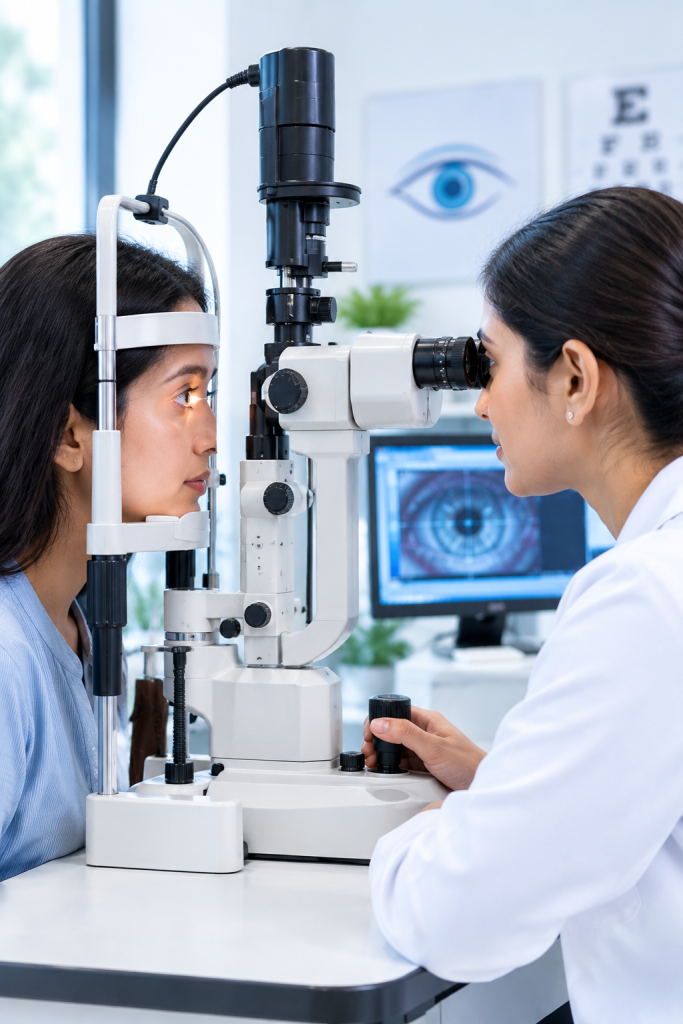
A proper LASIK consultation can involve several examinations.
Visual Acuity Testing
This measures how clearly you can see at different distances.
Refraction
Your doctor determines the exact refractive error and prescription.
Corneal Topography
This evaluates the surface shape of the cornea.
Corneal Tomography
More detailed imaging may be used to evaluate corneal structure and identify potential abnormalities.
Corneal Thickness Measurement
The thickness of the cornea is important when planning laser treatment.
Tear-Film Evaluation
The doctor may assess the ocular surface and tear production, particularly if you have symptoms of dry eye.
Comprehensive Eye Examination
Your ophthalmologist also checks for conditions such as glaucoma, cataract, infection and other problems that could influence surgical suitability.
What Happens If You Are Not a LASIK Candidate?
Not being suitable for LASIK does not necessarily mean that you have no vision-correction options. Depending on your eye condition, prescription and lifestyle, your ophthalmologist may discuss alternatives such as:
PRK
PRK is another laser vision-correction procedure that reshapes the cornea but does not use the same corneal flap technique as LASIK.
SMILE
SMILE is another refractive procedure that may be appropriate for selected patients, particularly for certain types of myopia.
Phakic IOL
An implantable lens may be considered in some patients who are not suitable for corneal laser surgery.
Glasses or Contact Lenses
For some people, conventional vision correction may remain the most appropriate option. The choice depends on individual eye measurements and medical circumstances.
LASIK Eligibility vs LASIK Suitability
It is useful to understand the difference between being technically eligible and being an appropriate candidate after a full consultation. For example, someone might:
- Be an adult
- Have a stable prescription
- Have a treatable refractive error
…but still need further assessment because of dry eye, corneal measurements or another eye condition. Likewise, someone with a higher prescription may not necessarily be excluded without evaluation because the appropriate alternative may depend on the specific eye measurements and available treatment options. This is why a detailed examination is more meaningful than a simple checklist.
Questions to Ask During Your LASIK Consultation
Before deciding on LASIK treatment, consider asking your ophthalmologist:
About Eligibility
- Am I a suitable LASIK candidate?
- Is my prescription stable?
- Is my cornea healthy enough for LASIK?
- Are my corneal thickness and shape suitable?
About Eye Health
- Do I have dry eye?
- Are there any other eye conditions that could affect surgery?
- Do I need to treat any eye problem before LASIK?
About Results
- What visual result is realistic for me?
- Could I still need glasses?
- Will I eventually need reading glasses?
About Alternatives
- Would PRK or SMILE be more appropriate for my eyes?
- Are there reasons I should not choose LASIK?
Having these questions answered can help you make a more informed decision.
How to Prepare for a LASIK Evaluation
If you are planning a LASIK consultation, bring your previous eye prescriptions if available. Tell your doctor:
- How long you have worn glasses or contact lenses
- Whether your prescription has changed recently
- Any history of dry eye
- Previous eye surgery
- Current medications
- Existing medical conditions
- Your occupation and lifestyle requirements
If you wear contact lenses, your doctor may ask you to stop wearing them before certain measurements because contact lenses can temporarily alter corneal shape. The exact duration depends on the lens type and your individual situation.
Is LASIK Right for You?
The answer cannot be determined from your glasses number alone. A suitable LASIK candidate generally needs stable vision, healthy eyes, appropriate corneal characteristics and realistic expectations. However, every patient’s situation is different. If you are considering LASIK, the most useful next step is a comprehensive refractive surgery evaluation. Your ophthalmologist can assess your eyes, explain your options and discuss whether LASIK—or another form of vision correction—is appropriate for you.
Final Takeaway
LASIK eligibility is about much more than your glasses prescription. A good candidate generally has sufficiently stable vision, healthy eyes, suitable corneal structure and realistic expectations about what laser vision correction can achieve. A comprehensive evaluation can help identify factors such as corneal thickness, corneal shape, dry eye, prescription stability and other eye conditions before a treatment decision is made. If you are thinking about LASIK, don’t rely only on an online eligibility calculator or someone else’s experience. Your eyes are unique, and the appropriate treatment should be determined after a professional examination.