
Glasses and contact lenses are effective ways to correct vision, but some people explore surgical options to reduce their dependence on them. LASIK eye surgery is one of the most widely known forms of refractive surgery and is designed to reshape the cornea so that light can focus more accurately on the retina. LASIK may be used to correct common refractive errors such as nearsightedness (myopia), farsightedness (hyperopia), and astigmatism. However, LASIK is not suitable for everyone. A detailed eye examination is essential before deciding whether the procedure is appropriate. This guide explains what LASIK is, how the procedure works, who may be suitable, what happens before and after treatment, possible benefits and risks, and what questions you should discuss with your ophthalmologist.
What Is LASIK Eye Surgery?
LASIK stands for Laser-Assisted In Situ Keratomileusis. It is a type of refractive surgery that permanently changes the shape of the cornea using laser technology. The cornea plays an important role in focusing light entering the eye. When its shape does not focus light correctly on the retina, refractive errors can occur. LASIK changes the shape of the cornea to improve the way light is focused. The main goal of LASIK is to reduce dependence on glasses or contact lenses, rather than guaranteeing that a person will never need them again.
Which Vision Problems Can LASIK Correct?
LASIK is primarily used for certain types of refractive errors.
1. Myopia
Myopia, commonly called short-sightedness or nearsightedness, makes distant objects appear blurry. A person with myopia may have difficulty seeing:
- Road signs
- Classroom boards
- Television screens
- Faces from a distance
- Objects across a room
LASIK can reshape the cornea in suitable patients to help correct myopic vision.
2. Hyperopia
Hyperopia, or farsightedness, can make close-up tasks more difficult and may sometimes affect distance vision. LASIK may correct certain levels of hyperopia in appropriately selected patients.
3. Astigmatism
Astigmatism occurs when the cornea has an irregular curvature, which can cause blurred or distorted vision. In suitable patients, LASIK can reshape the cornea to correct certain types and degrees of astigmatism.
How Does the LASIK Procedure Work?
Understanding the LASIK procedure can help you know what to expect during treatment.
Step 1: Detailed Eye Evaluation
Before surgery, your ophthalmologist performs a comprehensive assessment of your eyes. The evaluation may include:
- Vision testing
- Refraction
- Corneal measurements
- Corneal mapping or imaging
- Eye-pressure assessment
- Tear-film and dry-eye evaluation
- Examination of the overall health of the eye
These tests help determine whether your eyes are suitable for LASIK and help your surgeon plan the treatment.
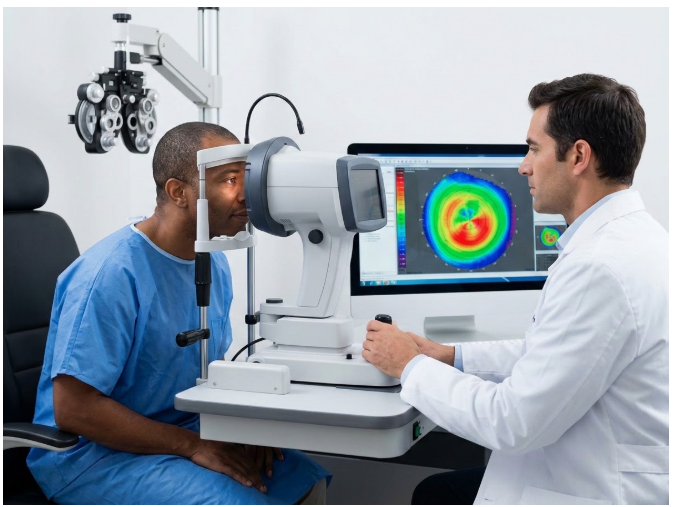
Step 2: Corneal Mapping
A detailed scan of the cornea can provide information about its shape and thickness. This information is important because LASIK involves reshaping corneal tissue. Your doctor uses the examination findings to determine whether laser vision correction is appropriate and how the procedure should be planned.
Step 3: Numbing the Eye
Before the procedure, anesthetic eye drops are used to numb the eye.The patient remains awake during LASIK. Depending on the individual situation, medication may also be provided to help the patient relax.
Step 4: Creating the Corneal Flap
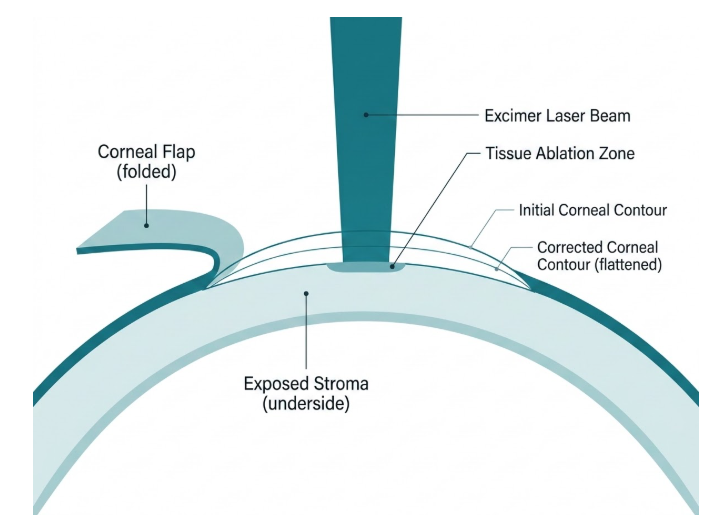
During conventional LASIK, a thin flap is created in the cornea and gently moved aside to expose the underlying corneal tissue. Modern LASIK may use a femtosecond laser for flap creation rather than a mechanical blade, depending on the technology and treatment plan.
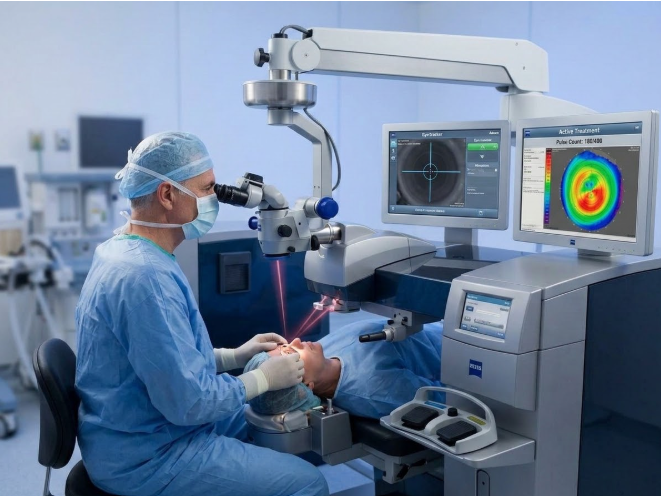
Step 5: Laser Reshaping
An excimer laser is then used to reshape the corneal tissue according to the patient’s prescription and treatment plan. The goal is to modify the corneal curvature so that incoming light can be focused more accurately.
Step 6: Repositioning the Flap
After the laser treatment, the corneal flap is placed back into its original position. The flap generally remains in place naturally while the eye begins its healing process.
Who May Be Suitable for LASIK?
Not everyone who wears glasses or contact lenses is automatically a LASIK candidate. Suitability depends on several factors, including:
- Age
- Stability of prescription
- Corneal thickness and shape
- Overall eye health
- Tear-film health
- Existing eye conditions
- General health
- Expectations about the results
LASIK is generally considered for adults with stable refractive errors. A comprehensive examination is necessary before treatment.
When LASIK May Not Be Recommended
LASIK may not be appropriate in certain situations. Your ophthalmologist may recommend another option or advise against surgery if you have conditions such as:
- Significant dry eye
- Keratoconus
- Certain corneal abnormalities
- Active eye infection
- Some forms of glaucoma
- Cataract
- Unstable vision prescription
- Certain medical conditions that may affect healing
Large pupils, thin corneas and previous eye surgery may also influence the assessment. This is why an online eligibility calculator or a glasses prescription alone cannot determine whether LASIK is right for you.
What Should You Do Before LASIK?
Preparation is an important part of laser eye surgery.
Stop Contact Lenses When Advised
Contact lenses can temporarily change the shape of the cornea. Depending on the type of lens, your doctor may ask you to stop wearing them for a period before your evaluation and surgery. The exact duration varies according to the type of contact lens, so follow your ophthalmologist’s instructions rather than using a general timeline.
Discuss Your Medical History
Tell your doctor about:
- Previous eye problems
- Previous eye surgery
- Current medications
- Allergies
- Dry-eye symptoms
- Changes in your prescription
- Any relevant medical conditions
Complete information helps your doctor evaluate potential risks and determine whether LASIK is suitable.
Understand the Expected Outcome
LASIK should not be approached as a guaranteed way to achieve perfect vision. Some people may still require glasses or contact lenses for certain activities, and age-related changes such as presbyopia can eventually affect near vision.
What Is LASIK Recovery Like?
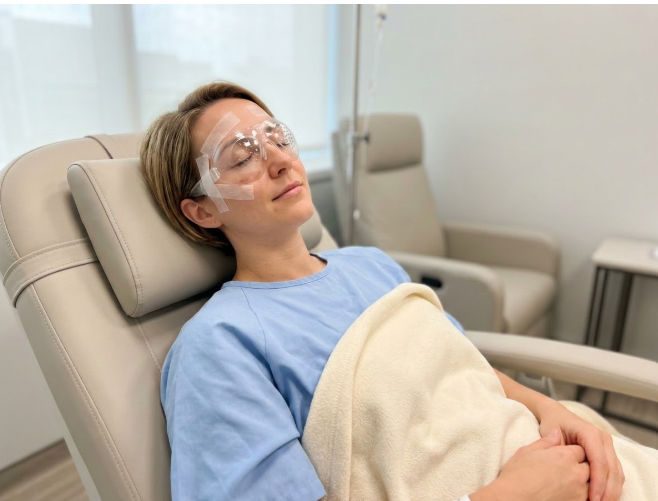
Recovery varies between individuals. Immediately after surgery, vision may be hazy or blurry, and the eyes can feel irritated, watery or sensitive to light. Some patients experience glare, halos or other visual symptoms during the early healing period.
First Few Hours
You may experience:
- Mild irritation
- Watering
- Blurred or hazy vision
- Light sensitivity
- A foreign-body sensation
Resting your eyes after surgery is generally recommended.
First Few Days
Vision often begins to improve, but it may fluctuate. Your ophthalmologist may prescribe eye drops and provide specific instructions about protecting your eyes. Avoid rubbing your eyes because this can interfere with healing and, in LASIK, can affect the corneal flap.
Following Weeks
Vision can continue changing as the eyes heal. Follow-up appointments allow your ophthalmologist to monitor healing and identify any complications early. The time required for complete visual stabilization varies between patients.
Benefits of LASIK Eye Surgery
For appropriately selected patients, LASIK can offer several potential benefits.
Reduced Dependence on Glasses
One of the primary reasons people consider LASIK is to reduce their dependence on glasses or contact lenses for everyday activities.
Convenience
Some patients appreciate greater convenience during activities such as:
- Sports
- Travel
- Outdoor activities
- Swimming
- Professional activities
Quick Visual Improvement
Vision may improve relatively quickly after LASIK, although complete healing and stabilization can take longer.
Customized Treatment
Modern evaluation and laser systems allow treatment planning based on individual eye measurements and refractive needs. However, the potential benefits must always be considered alongside the limitations and risks of surgery.
What Are the Risks of LASIK?
Like every surgical procedure, LASIK has potential risks and side effects. Some patients may experience:
- Dry eyes
- Glare
- Halos around lights
- Starbursts
- Light sensitivity
- Blurred vision
- Double vision
- Difficulty with night vision
- Under-correction or over-correction
- Infection
- Corneal healing problems
Rarely, serious complications can result in loss of vision. Some side effects may resolve with healing, while others can persist. This is why a thorough pre-operative evaluation and realistic expectations are important.
Can You Still Need Glasses After LASIK?
Yes. LASIK can reduce dependence on glasses, but it does not guarantee that glasses will never be needed again. For example, some patients may still require glasses for:
- Reading
- Night driving
- Specific visual tasks
- Residual refractive error
Presbyopia is another important consideration. LASIK does not prevent the normal age-related loss of near-focusing ability.
LASIK vs Other Laser Eye Surgery Options
LASIK is not the only form of refractive surgery. Depending on your eye structure and prescription, your ophthalmologist may discuss alternatives such as:
- PRK
- LASEK
- Epi-LASIK
- Phakic IOLs
Each procedure has different techniques, eligibility requirements, recovery patterns and potential risks. Therefore, the most appropriate procedure depends on your individual eye examination rather than simply choosing the most familiar procedure.
LASIK Treatment: What Should You Ask Your Eye Doctor?
Before deciding on laser eye surgery, consider discussing these questions:
- Am I a suitable candidate for LASIK?
- Is my prescription stable?
- Are my corneas healthy enough for treatment?
- Do I have dry eyes?
- What results can realistically be expected?
- Could I still need glasses?
- What are the possible risks in my individual case?
- Are PRK or another procedure more appropriate for me?
- What will my recovery involve?
- What follow-up care will I need?
A proper consultation should give you enough information to make an informed decision.
Why a Comprehensive Eye Evaluation Matters
LASIK is elective refractive surgery, so choosing the procedure should involve more than simply checking your glasses prescription. A detailed evaluation can identify conditions that may affect safety or outcomes, including corneal abnormalities, dry eye, glaucoma, cataract and other eye problems. Your ophthalmologist can also discuss your lifestyle, visual requirements, expectations and alternative treatment options.
When Should You Consider a LASIK Consultation?

You may consider discussing LASIK with an ophthalmologist if:
- You regularly depend on glasses or contact lenses.
- Your prescription has remained stable.
- You want to explore options for reducing dependence on corrective lenses.
- You are interested in understanding whether laser eye surgery is suitable for your eyes.
- You want to compare LASIK with other refractive procedures.
The first step should always be a comprehensive eye examination rather than assuming that LASIK is automatically suitable.