
Turning 40 does not mean that your eyesight will suddenly become weak. However, your eyes can gradually change with age. Some changes are normal, while others may be signs of an eye condition that needs professional attention.One of the most common changes is presbyopia. It usually becomes noticeable after age 40 and makes it harder to focus on nearby objects. You may find yourself holding your phone or book farther away, increasing the font size or needing brighter light to read. At the same time, the risk of certain eye conditions increases as people get older. Cataracts, glaucoma and age-related macular degeneration are among the conditions that become more important to monitor with age. Some eye diseases can develop without obvious early symptoms, which is why regular eye examinations matter. The good news is that you can build simple habits into your daily routine to support eye health after 40. Here are the most important habits to consider.
What Changes in Your Eyes After 40?
Age-related changes do not happen at exactly the same time or in the same way for everyone. One common change is presbyopia. The natural lens inside the eye becomes less flexible over time. As a result, the eye has more difficulty focusing on nearby objects.
You may notice:
- Difficulty reading small print
- Holding your phone farther away
- Eye strain while reading
- Headaches after close-up work
- Needing brighter light
- Difficulty focusing on nearby objects
- Changes in your glasses prescription
These changes can be normal. However, new or persistent vision problems should not automatically be blamed on age.
10 Best Eye Care Habits After 40
1. Schedule Regular Comprehensive Eye Examinations
One of the most important habits for eye care after 40 is staying consistent with professional eye examinations. You may have an eye condition without noticing obvious symptoms. A comprehensive examination can help an eye-care professional check your vision and look for signs of eye disease. A dilated eye examination can help detect conditions such as glaucoma, cataracts, diabetic retinopathy and age-related macular degeneration.
Why are eye exams important after 40?
An eye examination can assess:
- Visual acuity
- Refractive errors
- Eye pressure
- Peripheral vision
- Eye muscles and pupil responses
- The internal structures of the eye
- Signs of certain eye diseases
The recommended frequency depends on your age, health, family history and individual risk factors. People with conditions such as diabetes or high blood pressure may need examinations more frequently.
Simple habit: Do not wait until your vision becomes noticeably blurry before scheduling an eye examination.
2. Pay Attention to Changes in Near Vision
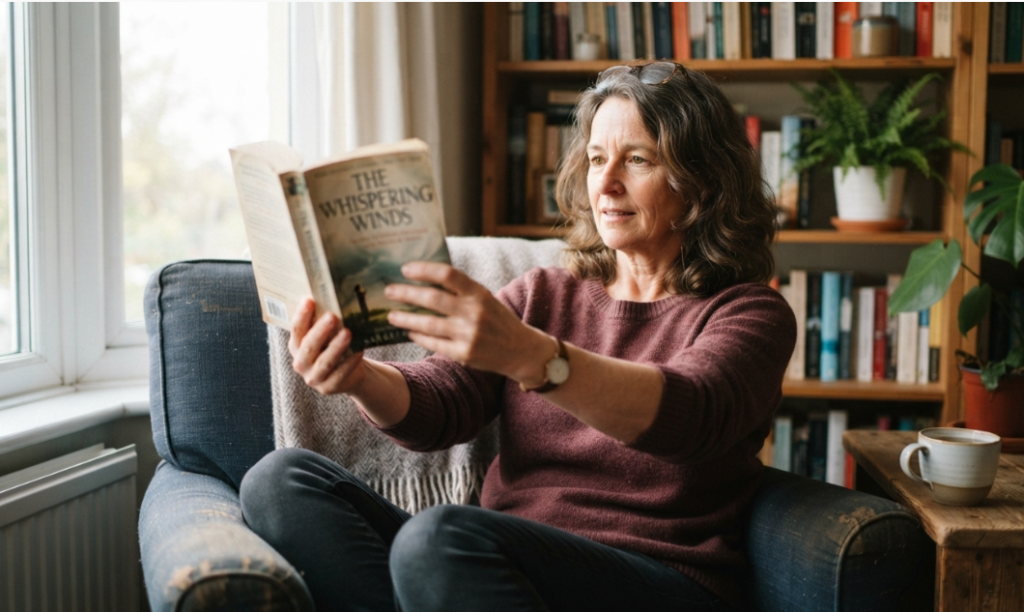
If reading suddenly becomes difficult after 40, presbyopia may be one possible reason. Presbyopia is a normal age-related refractive error. It commonly develops around middle age and makes close-up vision more difficult.
Common signs of presbyopia
You may notice:
- Small text looks blurry.
- You need to hold reading material farther away.
- Your eyes feel tired while reading.
- You need brighter lighting.
- You develop headaches after close-up work.
Reading glasses, prescription glasses or contact lenses may help, depending on your needs. Your eye doctor can determine the appropriate correction after an eye examination.
Do not simply assume you need stronger glasses
Blurred vision can have different causes. A professional examination can determine whether the problem is presbyopia, another refractive error or an eye condition.
3. Protect Your Eyes From UV Exposure

UV exposure is another reason to take eye protection seriously as you get older.When spending time outdoors, wear sunglasses that block 99% to 100% of UVA and UVB radiation. A wide-brimmed hat can provide additional protection.
Make UV protection a daily habit
Wear sunglasses when:
- Walking outdoors
- Driving during the daytime
- Spending time at the beach
- Playing outdoor sports
- Gardening
- Travelling
- Spending extended periods in strong sunlight
Cloudy weather does not mean you should ignore UV protection.
Eye care tip: Choose sunglasses based on UV protection rather than appearance alone.
4. Eat a Balanced Diet for Eye Health

Nutrition becomes an important part of your overall health as you age. Dr Ripan Kaur recommends a healthy diet that includes foods such as dark leafy greens and fish containing omega-3 fatty acids. A healthy eating pattern can also help support conditions such as diabetes, high blood pressure and high cholesterol, which can affect eye health.
Foods to include in your diet
Consider eating a variety of:
- Spinach
- Kale and other leafy greens
- Fish such as salmon and tuna
- Colourful vegetables
- Fresh fruits
- Nuts and seeds
- Other nutrient-rich whole foods
There is no single food that guarantees perfect vision. Instead, focus on a balanced diet that supports your overall health.
5. Keep Diabetes and Blood Pressure Under Control
Your general health and eye health are closely connected. Diabetes can increase the risk of diabetic retinopathy. High blood pressure can also contribute to health problems that affect the eyes. Managing these conditions can therefore be an important part of protecting your vision.
What can you do?
- Follow your doctor’s treatment plan.
- Monitor blood sugar if you have diabetes.
- Monitor blood pressure when advised.
- Take prescribed medicines correctly.
- Maintain a balanced diet.
- Stay physically active.
- Attend recommended medical check-ups.
If you have diabetes or high blood pressure, tell your eye-care professional about it during your eye examination.
6. Take Regular Breaks From Screens

Phones, computers and tablets are now part of everyday life. Spending long periods focusing on a screen can make your eyes feel tired or uncomfortable. One of the best Eye Specialists in Hisar, Dr Ripan Kaur recommends taking regular breaks during prolonged computer use. One commonly used approach is the 20-20-20 rule: Every 20 minutes, look at something about 20 feet away for 20 seconds.
Other screen habits
Try to:
- Blink regularly.
- Take longer breaks during extended work.
- Adjust the screen to a comfortable position.
- Increase text size if needed.
- Avoid unnecessary screen use when your eyes feel tired.
- Keep the screen at a comfortable viewing distance.
These habits can make screen use more comfortable, especially if you already experience eye strain.
7. Stop Smoking and Avoid Tobacco Smoke
Smoking affects more than your lungs. It can also affect eye health. Smoking increases the risk of conditions such as cataracts and age-related macular degeneration and can harm the optic nerve.
If you smoke
Consider speaking with a healthcare professional about quitting. Quitting can support your overall health and reduce exposure to tobacco-related risks. You should also try to avoid prolonged exposure to secondhand smoke whenever possible.
Remember: Protecting your vision is another reason to take smoking cessation seriously.
8. Use Protective Eyewear When Necessary
Eye injuries can happen at home, at work or during sports. If you are using power tools, working with chemicals or participating in an activity where particles can reach your eyes, use appropriate protective eyewear. Safety glasses and goggles are specifically designed to protect the eyes during activities such as home repairs, construction and certain sports.
Examples of situations where eye protection can help
- Home renovation
- Drilling
- Cutting materials
- Gardening
- Construction work
- Chemical handling
- Certain sports
- Activities involving dust or flying particles
Simple rule: If an activity can send something toward your eyes, consider appropriate eye protection.
9. Take Care of Dry or Irritated Eyes
Dry or irritated eyes can become more noticeable with age.
You may experience:
- Burning
- Gritty feeling
- Redness
- Watery eyes
- Eye fatigue
- Fluctuating vision
- Discomfort during screen use
Do not assume that persistent eye discomfort is simply a normal part of getting older. Depending on the cause, an eye-care professional may recommend appropriate treatment or changes to your daily routine.
Simple comfort measures
You can try:
- Taking regular screen breaks
- Blinking normally
- Avoiding direct airflow from fans or air conditioners
- Taking breaks from contact lenses when appropriate
- Keeping your environment comfortable
- Discussing persistent symptoms with an eye professional
If symptoms continue or become severe, professional evaluation is important.
10. Know Your Family Eye Health History
Your family history can provide useful information about your eye-health risks. Some eye diseases and conditions can run in families, including glaucoma and age-related macular degeneration.
Ask your family about:
- Glaucoma
- Cataracts
- Macular degeneration
- Significant vision loss
- Other diagnosed eye diseases
Share this information with your eye doctor.
Knowing your family history does not mean that you will develop the same condition. However, it can help your eye-care professional understand your risk factors and decide what monitoring may be appropriate.
Vision After 40: Changes You Should Not Ignore
Some changes in vision can occur naturally with age. However, certain symptoms should not simply be dismissed as “getting older.” Contact an eye-care professional if you notice:
- Sudden vision changes
- Persistent blurred vision
- New difficulty seeing at night
- Eye pain
- Significant redness
- Flashes of light
- A sudden increase in floaters
- Loss of peripheral vision
- Double vision
- Difficulty seeing despite wearing your usual glasses
Some eye diseases have few or no early symptoms, so an examination may be important even when you feel that your vision is normal.
Common Eye Conditions That Become More Important With Age
Getting older does not automatically mean you will develop an eye disease. However, some conditions become more common with age.
Cataract
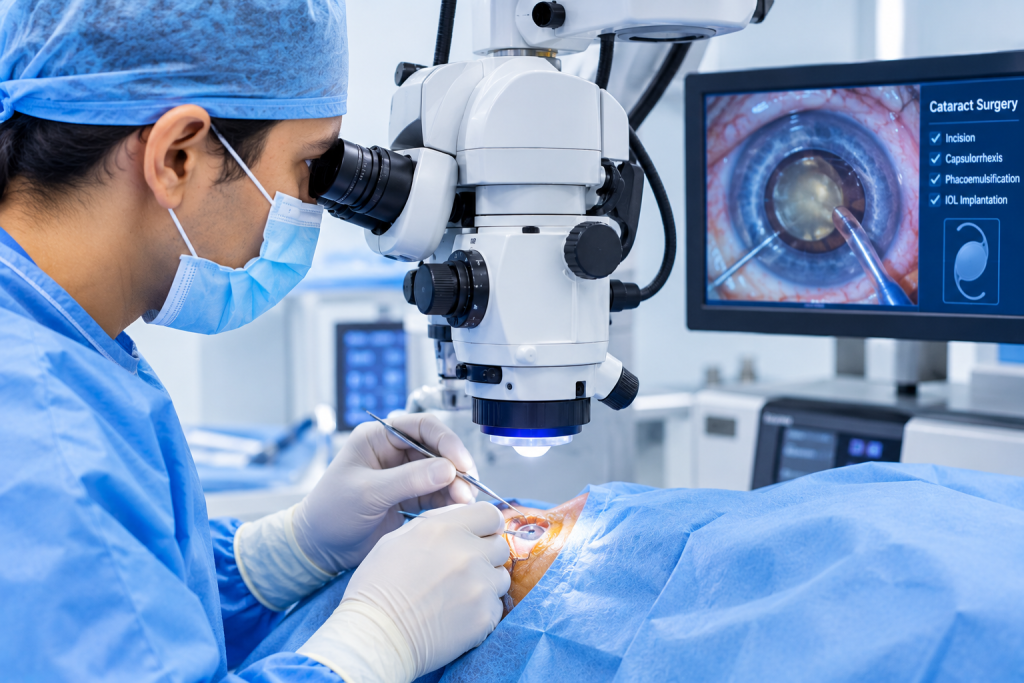
A cataract occurs when the eye’s natural lens becomes cloudy. It can gradually cause blurry or hazy vision and other visual difficulties.
Glaucoma
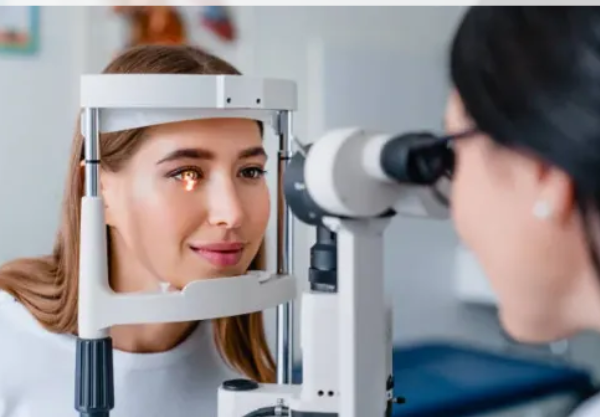
Comprehensive eye examination using specialized equipment to evaluate eye health and screen for glaucoma. Glaucoma refers to a group of eye diseases that can damage the optic nerve. Because some forms may develop without noticeable early symptoms, regular eye examinations are important.
Age-Related Macular Degeneration
Age-related macular degeneration, or AMD, affects the macula and can affect central vision. Risk increases with age.
Presbyopia
Presbyopia is a common age-related change that makes close-up vision more difficult. It usually becomes noticeable around middle age.
A Simple Daily Eye-Care Routine After 40
You do not need a complicated routine.
Morning
- Take your prescribed medicines if applicable.
- Eat a balanced breakfast.
- Wear UV-protective sunglasses when going outside.
During Work
- Follow the 20-20-20 rule.
- Blink regularly.
- Adjust your screen for comfortable viewing.
- Take longer breaks when needed.
Outdoors
- Wear sunglasses with appropriate UV protection.
- Use a hat when spending extended time outdoors.
- Wear protective eyewear during risky activities.
Evening
- Give your eyes a break from unnecessary screens.
- Remove contact lenses according to your prescribed schedule.
- Pay attention to any unusual vision changes.
Regularly
- Schedule eye examinations as recommended.
- Keep track of changes in your vision.
- Share your family eye-health history with your eye doctor.
Final Takeaway
Your 40s are a good time to become more intentional about eye health. Eye care after 40 does not require complicated steps. Regular eye examinations, UV protection, healthy nutrition, physical activity, proper management of health conditions, screen breaks and attention to changing vision can all become part of your routine. Most importantly, do not assume that every vision change is simply a normal part of aging. Some conditions can develop without obvious symptoms, which makes professional eye care an important part of long-term vision protection.