
Considering LASIK surgery can bring many questions: What happens before LASIK? Is the LASIK procedure painful? What actually happens during surgery? How quickly can you see clearly after LASIK? What precautions are necessary after treatment? Understanding the complete LASIK process can make the experience easier to prepare for and help you know what questions to discuss with your eye specialist. LASIK, or Laser-Assisted In Situ Keratomileusis, is a type of refractive surgery that uses laser technology to reshape the cornea. The goal is to correct certain refractive errors and reduce dependence on glasses or contact lenses. LASIK is commonly used for conditions such as nearsightedness, farsightedness and astigmatism. However, LASIK is not suitable for everyone. A detailed eye examination is necessary before deciding whether the procedure is appropriate for you. This guide explains the LASIK journey in three stages: Before LASIK → During LASIK → After LASIK
What Is the LASIK Procedure?
LASIK is a laser vision-correction procedure that changes the shape of the cornea so light can focus more accurately on the retina. The cornea is the clear front surface of the eye and plays an important role in focusing incoming light. During LASIK, a surgeon creates a thin corneal flap, uses a computer-controlled laser to reshape underlying corneal tissue, and then repositions the flap. The procedure is generally performed using numbing eye drops rather than general anesthesia. The exact technique, measurements, laser system and treatment plan can vary from patient to patient.
Before LASIK: What Should You Expect?
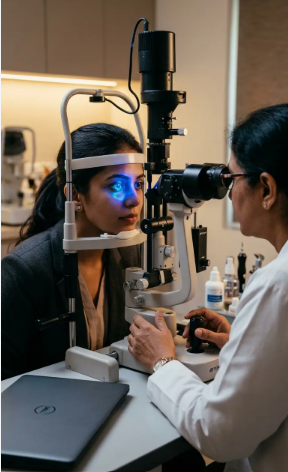
The preparation stage is an important part of the LASIK process. Before surgery, your eye specialist needs to determine whether your eyes are healthy enough for treatment and whether LASIK is appropriate for your vision correction needs.
1. Comprehensive Eye Examination
Your LASIK journey usually begins with a detailed eye examination. Your doctor may evaluate:
- Current vision and prescription
- Corneal shape
- Corneal thickness
- Tear film and dry-eye symptoms
- Pupil size
- Overall eye health
- Existing eye conditions
- Previous eye surgeries
- Stability of your prescription
A comprehensive evaluation helps your doctor determine whether LASIK is appropriate and whether another vision-correction option may be more suitable.
Why Is the Eye Examination Important?
LASIK changes the shape of the cornea permanently. Therefore, accurate measurements and careful screening are essential before treatment. Certain conditions, including keratoconus, significant dry eye, some corneal problems, cataracts and other eye conditions, may affect LASIK suitability or increase the risk of complications.
2. Corneal Mapping and Measurements
Your doctor may use specialized diagnostic equipment to create detailed measurements or maps of your cornea. These tests can help evaluate:
- Corneal curvature
- Corneal thickness
- Corneal surface
- Corneal irregularities
- Suitability for laser treatment
The measurements help the surgical team plan the laser treatment according to your individual eye. This is one reason why before LASIK testing should not be treated as a simple vision-check appointment.
3. Your Contact Lens Use Matters
If you wear contact lenses, your doctor may ask you to stop wearing them before your evaluation or surgery. Contact lenses can temporarily change the shape of the cornea. If accurate measurements are taken before the cornea returns to its natural shape, the surgical planning may be affected. The required period without lenses depends on the type of contact lens you use. Therefore, do not decide the contact-lens-free period yourself. Follow the exact instructions given by your ophthalmologist.
4. Discuss Your Medical and Eye History
Before LASIK, tell your doctor about:
- Previous eye surgeries
- Existing eye diseases
- Dry-eye symptoms
- Current medications
- Allergies
- Previous eye injuries
- Changes in your prescription
- Any other significant health conditions
Your doctor should also discuss the potential benefits, risks, limitations and alternatives before you provide informed consent.
Who May Not Be a Suitable LASIK Candidate?
LASIK is not automatically appropriate for every person who wears glasses. Your doctor may need to consider factors such as:
Unstable Prescription
If your prescription has changed significantly, your doctor may recommend waiting until vision becomes stable.
Corneal Problems
Conditions affecting corneal structure may increase the risks associated with LASIK.
Significant Dry Eye
Existing dry eye can be important when assessing LASIK suitability because LASIK can cause or worsen dry-eye symptoms in some patients.
Other Eye Conditions
Glaucoma, cataracts, corneal disease and certain infections or inflammatory conditions may affect eligibility. The final decision should always be based on an individual examination rather than a general checklist.
5. Discuss Your Expectations Before LASIK
One of the most important conversations before surgery is about what you expect from LASIK. LASIK can reduce dependence on glasses or contact lenses, but it does not guarantee perfect vision. Some people may still require glasses for certain activities, and age-related presbyopia can affect near vision later in life. Ask your ophthalmologist:
- What vision correction can I reasonably expect?
- Am I a suitable candidate?
- Which procedure is appropriate for my eyes?
- What are the possible risks?
- What will recovery be like?
- When can I return to work?
- When can I exercise?
- When can I swim?
- Will I need glasses after surgery?
Having realistic expectations is an important part of informed decision-making.
6. Preparing the Day Before LASIK
Your surgical center will provide specific instructions. Common preparation may include avoiding products around the eyes such as:
- Eye makeup
- Creams
- Lotions
- Perfumes
Your doctor may also provide eyelid or eyelash-cleaning instructions. These steps are intended to reduce contamination around the surgical area. You should also arrange transportation because you should not plan to drive yourself home immediately after surgery.
During LASIK: What Happens Step by Step?
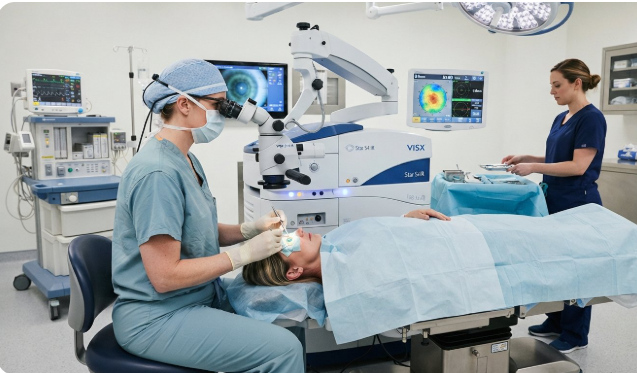
Now let’s look at the actual LASIK process. The procedure itself is usually relatively short, although preparation and postoperative observation add time to the overall visit. The FDA notes that the surgery itself should take less than 30 minutes, although individual circumstances vary.
Step 1: You Are Positioned Comfortably
You will lie back in a reclining chair. The surgical team prepares the eye and surrounding area before beginning the procedure.
Step 2: Numbing Eye Drops Are Used
Numbing eye drops are placed in the eye. This reduces sensation during the procedure. You may still notice pressure or unusual sensations during certain parts of the surgery, but the experience is different from what many people imagine when they hear the word “surgery.”
Step 3: Your Eyelids Are Kept Open
A small instrument called a lid speculum may be used to keep the eyelids open during the procedure. This allows the surgeon to work without you needing to consciously keep your eyes open.
Step 4: A Corneal Flap Is Created
Traditional LASIK involves creating a thin flap in the cornea. Depending on the technology and surgical approach, the flap may be created using a mechanical microkeratome or a femtosecond laser. You may notice pressure or temporarily reduced vision during this stage.
Step 5: The Excimer Laser Reshapes the Cornea
The surgeon then uses the laser according to your individualized treatment plan. You will generally be asked to look toward a target light. The laser removes microscopic amounts of corneal tissue to change the cornea’s shape. Modern systems may incorporate tracking technology to help maintain accurate treatment positioning.
Step 6: The Flap Is Repositioned
After the laser treatment, the corneal flap is carefully placed back into position. LASIK does not normally require stitches to hold the flap in place. A protective eye shield may be used after surgery to help prevent accidental rubbing or pressure on the eye.
What Does LASIK Feel Like?
People can experience the procedure differently. During LASIK, you may notice:
- Pressure around the eye
- Temporary dimming or blurred vision
- Unusual sounds
- A mild smell during laser treatment
- Awareness of the surgical equipment
- Mild discomfort
The FDA notes that patients may notice new sounds and smells during laser treatment, while the eye is being treated under local numbing drops. Your surgeon should explain what sensations you may experience before the procedure.
After LASIK: What Happens Immediately?
The after LASIK period begins as soon as the procedure is complete. Your vision may not be perfectly clear immediately. You may experience:
- Hazy or blurry vision
- Watering
- Light sensitivity
- Burning or itching
- Foreign-body sensation
- Mild discomfort
- Glare
- Halos around lights
- Temporary redness
These symptoms often improve as the eye heals, but the recovery experience varies between patients.
The First 24 Hours After LASIK
The first day is mainly about protecting your eyes and following your surgeon’s instructions.
Do Not Rub Your Eyes
This is one of the most important precautions.
Rubbing the eyes can interfere with healing and may affect the corneal flap. If your eyes feel itchy or uncomfortable, use only the drops or treatments recommended by your ophthalmologist.
Use Prescribed Eye Drops
Your doctor may prescribe eye drops to help manage inflammation and reduce the risk of infection. Artificial tears may also be recommended if you experience dryness. Always follow the prescribed schedule rather than changing medications yourself.
Wear Your Protective Shield
Your surgeon may recommend an eye shield, especially while sleeping. Its purpose is to prevent accidental rubbing or pressure on the eye during the healing period.
LASIK Recovery: What Happens Over the Following Days?
Recovery is not necessarily identical for everyone. Your vision may improve quickly but can still fluctuate during the early healing period. You may experience:
- Dryness
- Glare
- Halos
- Light sensitivity
- Fluctuating vision
- Mild irritation
These symptoms generally decrease as healing progresses, although some visual symptoms can last longer in certain patients.
When Can You Return to Normal Activities?
Your ophthalmologist should provide personalized instructions because activity restrictions depend on your healing and procedure. The FDA advises avoiding certain activities for specific periods, including swimming and strenuous/contact sports, because protecting the healing eye is important.
Exercise
Light activity may be resumed according to your doctor’s instructions. Strenuous or contact sports require more caution.
Swimming
Swimming pools, hot tubs and similar water activities may need to be avoided for a period after surgery.
Eye Makeup
Your surgeon may recommend waiting before restarting makeup around the eyes.
Driving
Do not drive until your ophthalmologist confirms that your vision meets the necessary requirements and you can drive safely.
How Long Does It Take for Vision to Stabilize After LASIK?
It is important to understand that early improvement and final stabilization are not always the same thing. Your vision may improve rapidly but continue to fluctuate during the following weeks. The FDA notes that vision can take several months to stabilize in some patients, while AAO EyeWiki notes that refractive stabilization can depend on factors such as the amount of correction performed. Therefore, do not judge the final result based only on the first few days.
Possible Side Effects After LASIK
LASIK is generally performed after careful screening, but it still has potential risks and side effects. Some people may experience:
Dry Eyes
Dryness can occur after LASIK and may cause discomfort or fluctuating vision. In some patients, dry-eye symptoms can be significant or persistent.
Glare and Halos
Some patients notice glare, halos or starbursts, particularly around lights at night.
Blurred or Fluctuating Vision
Vision may fluctuate during the healing process.
Under-correction or Over-correction
The desired refractive correction may not be fully achieved.
Infection or Healing Problems
Although uncommon, complications such as infection and corneal-healing problems can occur.
Vision Loss
Rarely, LASIK can result in vision loss or reduced visual quality that may not be completely corrected. This is why detailed screening and informed discussion with an ophthalmologist are essential.
When Should You Contact Your Eye Doctor After LASIK?
Do not wait for a routine appointment if you experience concerning symptoms. Contact your eye doctor promptly if you develop:
- Severe eye pain
- Sudden or worsening vision
- Symptoms that become worse instead of better
- Significant redness
- New or unusual visual symptoms
- Any concern about the healing eye
The FDA specifically advises contacting your doctor immediately for severe pain or worsening vision or symptoms after LASIK.
Follow-Up After LASIK
Follow-up appointments are an important part of the LASIK process. During follow-up, your ophthalmologist may:
- Check visual acuity
- Examine the cornea
- Assess healing
- Evaluate dry-eye symptoms
- Review your eye drops
- Monitor vision stability
- Decide whether further treatment is necessary
The FDA recommends early postoperative evaluation and continued follow-up according to the surgeon’s schedule.
LASIK Does Not Stop Age-Related Vision Changes
One important point many patients overlook is presbyopia. LASIK can correct certain refractive errors, but it does not prevent the normal age-related change in near focusing ability. Therefore, a person who has had successful LASIK may still need reading glasses later in life. This is an important topic to discuss before surgery, particularly for adults approaching or experiencing age-related near-vision changes.
Simple Before, During & After LASIK Checklist
Before LASIK
- Complete your eye examination
- Have corneal measurements performed
- Follow contact-lens instructions
- Discuss medical and eye history
- Review medications
- Understand risks and alternatives
- Discuss realistic expectations
- Follow pre-surgery hygiene instructions
- Arrange transportation
During LASIK
- Receive numbing eye drops
- Follow the surgeon’s fixation instructions
- Expect some pressure or unusual sensations
- Allow the surgeon to complete the laser treatment
- Follow immediate postoperative instructions
After LASIK
- Use prescribed eye drops
- Do not rub your eyes
- Use the protective shield as instructed
- Attend follow-up appointments
- Avoid restricted activities
- Protect your eyes from injury
- Report severe pain or worsening vision promptly
Final Takeaway
Understanding what to expect before, during and after LASIK surgery can help you prepare realistically for the procedure. The LASIK journey begins long before the laser treatment itself. A detailed eye examination, accurate corneal measurements, medical history, contact-lens preparation and a clear discussion about expectations are all important parts of before LASIK care. During the procedure, numbing drops are used, a corneal flap is created, the cornea is reshaped with a laser and the flap is repositioned. After LASIK, temporary blurred vision, dryness, light sensitivity, glare or halos may occur while the eyes heal. Following postoperative instructions, avoiding eye rubbing, using prescribed drops and attending follow-up appointments are important parts of recovery. Most importantly, LASIK should be considered only after an individualized evaluation with a qualified eye specialist.