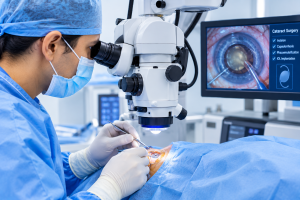

What Is a Cataract?
A cataract is a cloudy area that develops in the natural lens of the eye. The lens normally helps focus light clearly onto the retina. As the lens becomes cloudy, vision may gradually become blurry, hazy or less colourful.
Cataracts are commonly associated with ageing, but they can also develop due to factors such as diabetes, previous eye injury, certain medications, previous eye surgery or prolonged exposure to sunlight.
Common Signs of Cataract
Blurry or cloudy vision
Difficulty seeing in dim light
Increased sensitivity to light
Halos around lights
Difficulty reading
Changes in Glasses Prescription
When Is Cataract Surgery Needed?
Not every cataract needs immediate surgery. Cataract surgery is generally considered when vision changes begin to interfere with everyday activities such as reading, driving, working, watching television or other tasks that are important to you.
Your ophthalmologist can evaluate the cataract, overall eye health and visual needs before discussing whether surgery is appropriate.
01. Reading Difficulty
Difficulty reading books, newspapers or mobile screens.
02. Night Driving Problems
Glare, halos or reduced vision at night.
03.Daily Activities Affected
Vision problems interfering with normal routine.
How Is Cataract Diagnosed?
Visual Assessment
Eye Examination
Dilated Eye Examination
Surgical Evaluation
Cataract Treatment
Cataract treatment focuses on improving vision affected by the clouding of the eye’s natural lens. In the early stages, an updated glasses prescription, better lighting, or other vision-support measures may help. When cataracts begin to interfere with daily activities such as reading, driving, working, or watching television, cataract surgery may be recommended.
During cataract surgery, the cloudy natural lens is removed and replaced with a clear artificial intraocular lens (IOL). A detailed eye examination helps the ophthalmologist assess the cataract, overall eye health, and suitable treatment options for the patient.
01.Early Cataract
Updated Glasses Prescription
In the early stages, a new glasses prescription, brighter lighting or anti-glare measures may help improve visual function.
02.Advanced Cataract
Cataract Surgery
When cataract-related vision loss significantly affects daily activities, surgery may be recommended.
03.Personalized Evaluation
Individual Treatment Plan
Your ophthalmologist evaluates your eyes and discusses suitable treatment options based on your visual needs.
Cataract Surgery: How Does It Work?
Cataract surgery involves removing the cloudy natural lens of the eye and replacing it with an artificial lens called an intraocular lens (IOL).
The procedure commonly involves numbing the eye, removing the cloudy lens and placing the selected IOL inside the eye. Your ophthalmologist will explain the procedure and lens options based on your individual eye measurements and visual requirements.
Eye Preparation
Cloudy Lens Removal
IOL Placement
Recovery & Follow-Up
Choosing the Right Intraocular Lens (IOL)
After the cataract is removed, an artificial intraocular lens is placed inside the eye. The appropriate IOL depends on factors such as your eye measurements, visual requirements and overall eye health.
Your ophthalmologist will discuss the available lens options and help you understand what may be suitable for your individual needs.
01. Monofocal IOL
Designed to provide clear vision at a selected focal distance.
02.Enhanced / Premium Options
Certain lens designs may offer different ranges of vision for selected patients.
03.Personalized Lens Selection
The final choice depends on your eye examination and visual goals.
How to Prepare for Cataract Surgery
☑️ Comprehensive eye examination
☑️ Eye measurements and IOL calculation
☑️ Discuss current medicines with your doctor
☑️ Follow prescribed eye-drop instructions
☑️ Follow fasting instructions if provided
☑️ Arrange transportation after surgery
☑️ Follow eyelid/eye hygiene instructions
☑️ Inform your doctor if you become unwell before surgery
Pre-operative instructions can vary, so patients should follow the specific instructions given by their surgical team.
Cataract Surgery Recovery
1.First 24 Hours
Your eye may feel mildly uncomfortable, itchy or sensitive.
2. First Few Days
Vision can be blurry while the eye recovers.
3. Following Weeks
Healing continues and follow-up appointments help monitor recovery.
4. Long-Term
Your ophthalmologist will assess your vision and eye health and advise whether a new glasses prescription is needed
Cataract Surgery Risks & Possible Complications
Cataract surgery is generally considered safe and effective, but as with any surgery, complications can occur. Possible complications include infection, bleeding, changes in eye pressure, retinal detachment, inflammation or other vision-related problems. Posterior capsule opacification can also develop later and may be treated with a laser procedure when appropriate.
Cataract Care by Dr. Ripan Kaur Kamra

Dr. Ripan Kaur Kamra
Dr. Ripan Kaur Kamra is a dedicated and skilled ophthalmologist with specialized expertise in cataract surgery and comprehensive eye care. With a strong clinical background and a patient-first approach, she is known for delivering safe, precise, and personalized eye treatment focused on long-term visual clarity and comfort.
Dr. Ripan Kaur completed her MBBS, followed by MS in Ophthalmology, gaining a solid foundation in both medical and surgical aspects of eye care. Her advanced training has equipped her with in-depth knowledge of diagnosing and managing a wide range of ocular conditions with accuracy and confidence.
As an experienced Phaco Surgeon, Dr. Ripan Kaur Kamra specializes in modern, minimally invasive cataract surgery, using advanced phacoemulsification techniques to achieve excellent visual outcomes and faster recovery for patients. She emphasizes precision, safety, and patient comfort throughout the surgical process.
Dr. Ripan Kaur strongly believes in combining advanced technology with compassionate care. She focuses on early diagnosis, customized treatment planning, and clear patient communication, ensuring that every individual feels informed, reassured, and confident about their eye care journey.
Frequently Asked Questions About Cataract
Q1.What is a cataract?
Ans: A cataract is clouding of the natural lens of the eye that can gradually affect vision.
Q2.What are the common symptoms of cataract?
Ans: Common symptoms include blurry vision, faded colours, difficulty seeing at night, glare, halos and frequent changes in glasses prescription.
Q3.Does every cataract require immediate surgery?
Ans: No Surgery is generally considered when cataract-related vision problems begin interfering with daily activities.
Q4.What happens during cataract surgery?
Ans: The cloudy natural lens is removed and replaced with an artificial intraocular lens (IOL).
Q5.Can cataracts come back after surgery?
Ans: The original cataract does not grow back, but clouding of the lens capsule, called posterior capsule opacification, can develop later and may be treated with laser treatment.
Q6. How long does cataract surgery recovery take?
Ans: Recovery varies between patients. Your ophthalmologist will monitor healing during follow-up visits and advise when normal activities can be resumed
Clearer Vision Starts With the Right Eye Care
Don’t ignore gradual changes in your vision.
Get your eyes evaluated and discuss your cataract treatment options with an ophthalmologist.