WHAT IS REFRACTIVE EYE SURGERY?
Refractive eye surgery is a group of procedures used to correct certain refractive errors by changing how light is focused inside the eye. Depending on the patient’s eye condition, prescription, corneal health and visual requirements, different procedures may be considered.
COMMON VISION PROBLEMS
Myopia
Distant objects may appear blurred while nearby objects can often be seen more clearly.
Hyperopia
Near vision may be difficult, and some people may also experience blurred distance vision.
Astigmatism
Vision may appear blurred or distorted at different distances.
Presbyopia
Age-related difficulty focusing on nearby objects, commonly becoming noticeable after around 40.
CAUSES & FACTORS AFFECTING VISION
01. Eye Shape
The shape and length of the eye can affect how light focuses on the retina. When light does not focus correctly on the retina, it can result in blurred vision and refractive errors such as myopia or hyperopia.
02. Corneal Shape
The cornea plays an important role in focusing light into the eye. Changes or irregularities in its curvature can affect how clearly light is focused and may contribute to refractive errors such as astigmatism.
Refractive errors can sometimes run in families. A family history of vision problems may increase the likelihood of developing certain refractive errors, making regular eye examinations useful.
04. Age-Related Changes
As we age, the eye’s natural focusing ability can change. This can particularly affect near vision and may lead to presbyopia, which commonly becomes noticeable after the age of 40.
REFRACTIVE EYE SURGERY EVALUATION & EYE EXAMINATION
Before considering refractive eye surgery, a comprehensive eye examination is performed to assess your vision, refractive error, corneal shape and thickness, tear film and overall eye health. These measurements help determine whether a refractive procedure may be appropriate for you.

Examination process
1.Vision & Refraction Test
2.Corneal Mapping & Topography
3. Corneal Thickness Measurement
4. Eye Health Examination
5.Dry Eye & Tear Film Assessment
6. Eye Pressure Measurement & Eye History

TYPES OF REFRACTIVE EYE SURGERY
01. LASIK
LASIK reshapes the cornea using laser technology and may reduce dependence on glasses or contact lenses.
02. PRK
PRK is another laser vision-correction procedure in which the corneal surface is treated before laser reshaping.
03. Other Refractive Procedures
Depending on eye condition, prescription, corneal characteristics and age, other refractive options may sometimes be considered.
HOW IS REFRACTIVE EYE SURGERY PERFORMED?
Refractive eye surgery is performed to correct certain vision problems by changing the way light is focused onto the retina. The exact procedure depends on the type of refractive error, corneal condition, eye health and the patient’s individual visual needs. Common corneal-based procedures include LASIK and PRK, while other refractive procedures may be considered in selected patients.
Refractive Eye Surgery Procedure
Eye Preparation
The eye is examined and prepared for the procedure. Numbing eye drops are generally used for laser procedures.
Corneal Treatment
Depending on the procedure, the corneal surface or a corneal flap is prepared to allow the laser treatment.
Laser Vision Correction
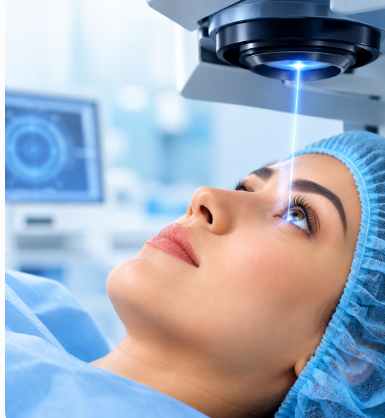
A laser is used according to the patient's measurements and treatment plan to reshape the cornea and improve the way light focuses on the retina.
Post-Surgery Care
After the procedure, the eye is monitored and prescribed drops and aftercare instructions are provided. Follow-up examinations help monitor healing and visual recovery.
WHO MAY BE SUITABLE FOR REFRACTIVE SURGERY?
01. Age & Vision Stability
The patient should generally be an adult, and the prescription should be reasonably stable.
02. Healthy Cornea
Corneal shape, thickness and overall condition are carefully evaluated.
03. Overall Eye Health
Conditions such as significant dry eye, corneal disease, cataract or certain other eye problems may affect suitability.
04. Stable Prescription
Recent changes in glasses or contact-lens prescription may indicate refractive instability.
WHY CHOOSE DR. RIPAN KAUR KAMRA?

Dr. Ripan Kaur Kamra
Dr. Ripan Kaur Kamra is a dedicated and skilled ophthalmologist with specialized expertise in cataract surgery and comprehensive eye care. With a strong clinical background and a patient-first approach, she is known for delivering safe, precise, and personalized eye treatment focused on long-term visual clarity and comfort.
Dr. Ripan Kaur completed her MBBS, followed by MS in Ophthalmology, gaining a solid foundation in both medical and surgical aspects of eye care. Her advanced training has equipped her with in-depth knowledge of diagnosing and managing a wide range of ocular conditions with accuracy and confidence.
As an experienced Phaco Surgeon, Dr. Ripan Kaur Kamra specializes in modern, minimally invasive cataract surgery, using advanced phacoemulsification techniques to achieve excellent visual outcomes and faster recovery for patients. She emphasizes precision, safety, and patient comfort throughout the surgical process.
Dr. Ripan Kaur strongly believes in combining advanced technology with compassionate care. She focuses on early diagnosis, customized treatment planning, and clear patient communication, ensuring that every individual feels informed, reassured, and confident about their eye care journey.
REFRACTIVE SURGERY RECOVERY & AFTERCARE
Recovery after refractive eye surgery varies depending on the procedure, individual eye health and healing response. Following your ophthalmologist’s instructions carefully, using prescribed eye drops and attending scheduled follow-up examinations can help support proper healing and visual recovery.
First Few Hours
Mild irritation, watering, light sensitivity or temporary blurred vision may occur depending on the procedure.
First Few Days
Use prescribed eye drops as directed and avoid rubbing or putting unnecessary pressure on the eyes.
Follow-Up Examination
Follow-up visits help monitor healing, eye health and visual recovery.
During Recovery
Follow your ophthalmologist’s instructions regarding screen use, driving, exercise, swimming and other activities.
BENEFITS & LIMITATIONS
Potential Benefits
- May reduce dependence on glasses
- May reduce dependence on contact lenses
- Can correct certain refractive errors
- May improve functional vision for suitable patients
Limitations
- Results vary between individuals
- Glasses may still be needed for some activities
- Presbyopia is not eliminated by standard LASIK
- Dry eye, glare, halos and other visual symptoms can occur
- Additional treatment may sometimes be required
Other Eye Care Services
LASIK
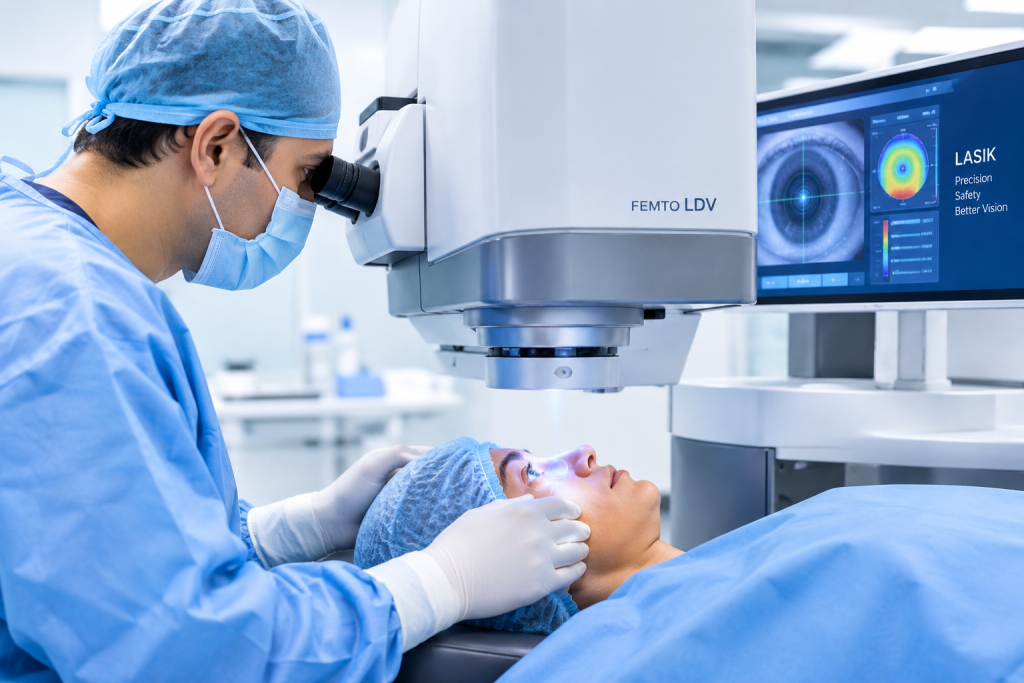
LASIK is a laser vision-correction procedure used to correct refractive errors such as myopia, hyperopia and astigmatism. During LASIK, a laser reshapes the cornea so that light can focus more accurately on the retina, which may reduce dependence on glasses or contact lenses.
CATARACT
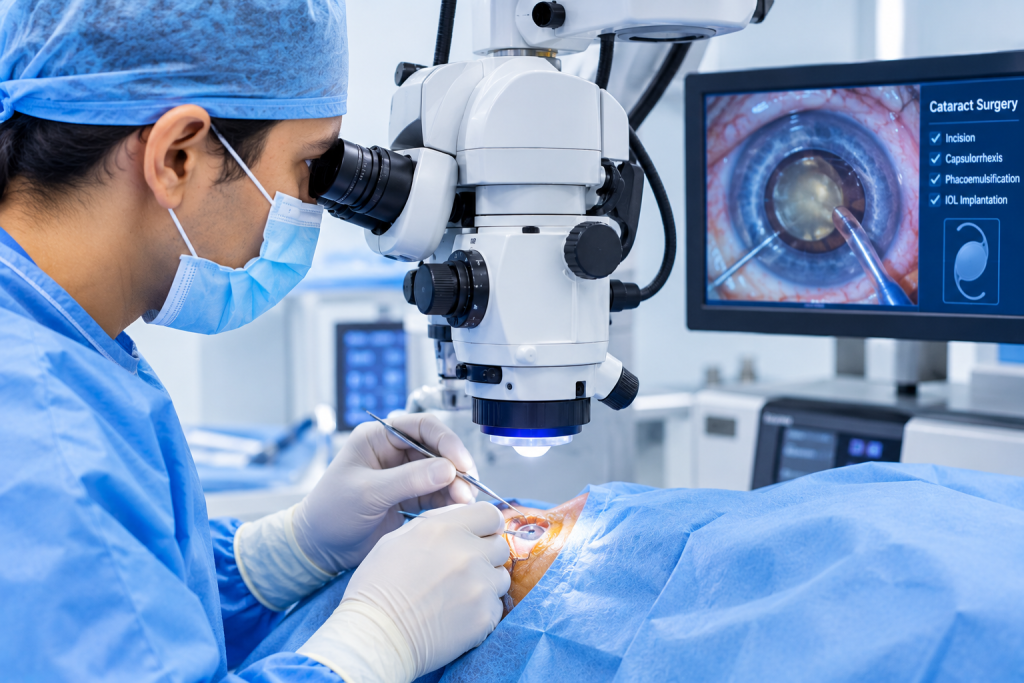
Cataract is a clouding of the eye’s natural lens that can cause blurry or hazy vision, faded colors, glare and difficulty seeing at night. Cataracts usually develop gradually and may begin to interfere with everyday activities such as reading, driving or watching TV.
DRY EYE
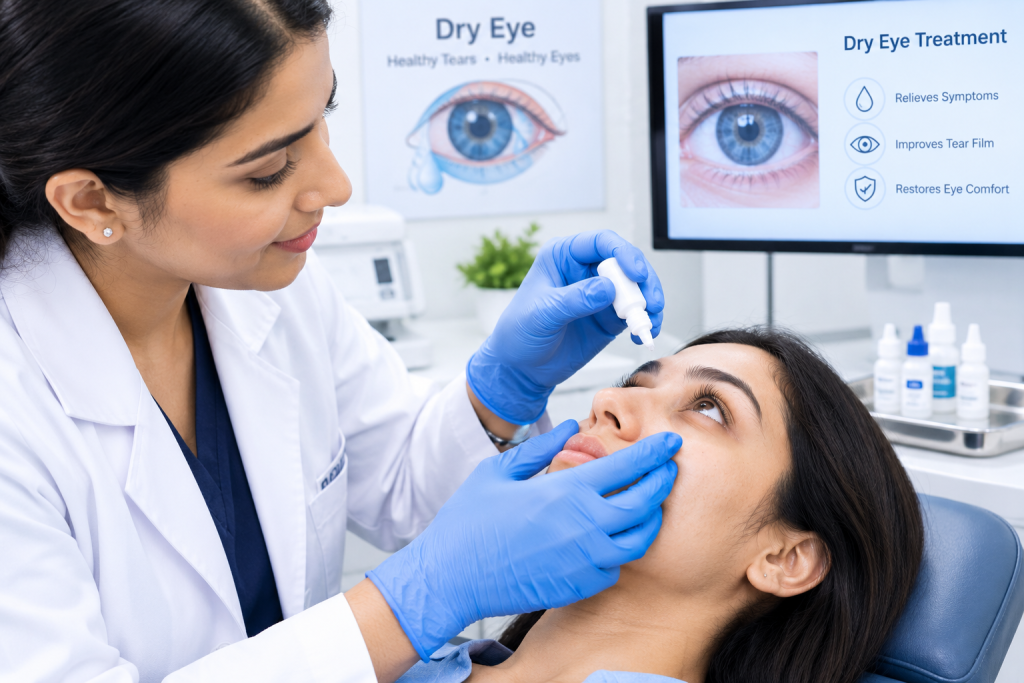
Dry eye treatment focuses on relieving symptoms and addressing the underlying cause of inadequate or unstable tears. Depending on the condition, treatment may include artificial tears, prescription eye drops, lifestyle changes and other specialized treatments.
Frequently Asked Questions
Q1.Can refractive surgery remove glasses permanently?
Ans: It may significantly reduce dependence on glasses or contact lenses, but there is no guarantee that glasses will never be needed again.
Q2. Is LASIK the only refractive eye surgery?
Ans: No. LASIK is one type of refractive surgery. PRK and other procedures may be considered depending on the patient’s eyes and visual needs.
Q3.Can everyone undergo refractive surgery?
Ans: No. Suitability depends on prescription stability, corneal condition, eye health, dry-eye status, medical history and other factors.
Q4. Will I need glasses after refractive surgery?
Ans: Some patients may still need glasses for certain activities, including reading or night driving.