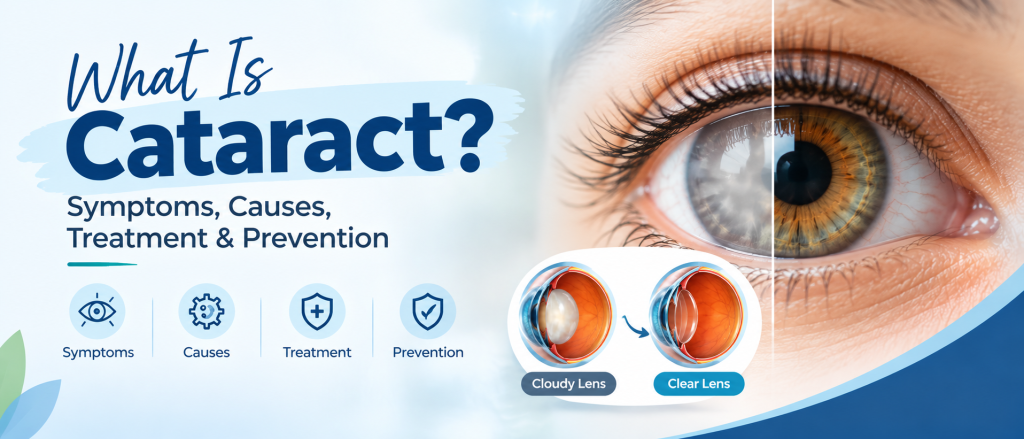
A cataract is a common eye condition in which the normally clear natural lens of the eye becomes cloudy. The lens plays an important role in focusing light onto the retina so that we can see clear images. When the lens becomes cloudy, vision may gradually become blurry, hazy or less colourful.
Cataracts are most commonly associated with ageing, but they can also develop due to diabetes, eye injuries, certain medications, prolonged exposure to ultraviolet (UV) radiation and other risk factors. Cataracts usually develop gradually and may not cause noticeable symptoms early on.
The good news is that effective cataract treatment is available. When a cataract begins interfering with everyday activities such as reading, driving, working or watching television, an eye specialist can assess your eyes and discuss appropriate treatment options. Surgery is currently the definitive treatment for removing an established cataract.
In this guide, we will discuss what cataract is, cataract symptoms, cataract causes, signs of cataract, diagnosis, cataract treatment, prevention and frequently asked questions.
What Is Cataract?
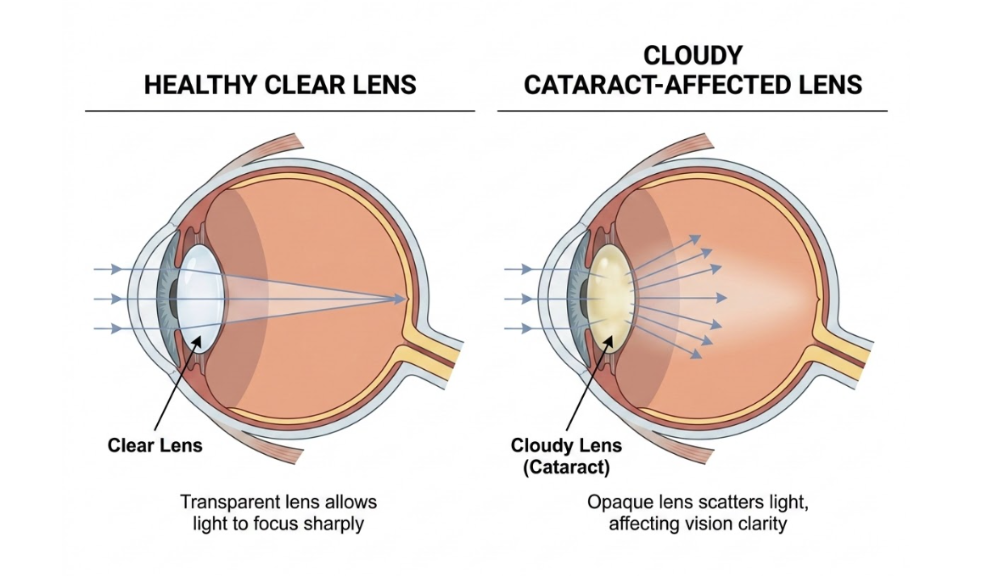
A cataract occurs when the natural lens inside the eye becomes cloudy. A healthy lens is transparent and helps focus light onto the retina. When proteins and structures within the lens change over time, areas of cloudiness can develop.
As the cataract progresses, less clear light reaches the retina. This can gradually affect the sharpness and quality of vision.
Cataracts can develop in one eye or both eyes. They do not spread from one eye to the other, although cataracts may develop in both eyes at different rates.
Age-related cataracts are the most common type. However, cataracts can also occur following an eye injury, certain eye surgeries, some medical conditions or other causes.
What Are the Symptoms of Cataract?
Understanding cataract symptoms can help you recognize changes in your vision and seek an eye examination at the appropriate time.
Cataracts often develop slowly, and mild cataracts may cause no noticeable symptoms initially. As the cataract progresses, vision changes can become more obvious.

Common Cataract Symptoms
Some common signs of cataract include:
- Blurred or cloudy vision
- Difficulty seeing clearly at night
- Increased sensitivity to bright lights
- Glare from sunlight, lamps or vehicle headlights
- Halos around lights
- Faded or less vibrant colours
- Difficulty reading
- Difficulty driving, especially at night
- Double vision in some cases
- Frequent changes in glasses or contact lens prescription
These symptoms can vary depending on the type and location of the cataract.
Blurry or Cloudy Vision
One of the most common cataract symptoms is blurry or cloudy vision. People may describe it as looking through a foggy or dirty window.
Initially, the change may be subtle. Over time, however, it can begin interfering with normal activities.
Difficulty Seeing at Night
Cataracts can make low-light vision more difficult. Some people may particularly notice problems while driving at night.
Headlights and other bright sources of light may also appear excessively bright or produce glare.
Glare and Halos Around Lights
Another common sign of cataract is increased glare. Bright lights may appear uncomfortable, and some people notice halos around lights.
Are You Experiencing Blurry Vision or Night Glare?
If you notice that your vision feels like looking through a foggy window, or if oncoming headlights and streetlights create distracting glare or halos at night, these could be early signs of cataract development. These visual changes often develop gradually, making it easy to adapt at first, but over time they can impact daily activities such as reading, driving, or recognizing faces.
Next Steps: Schedule a comprehensive eye examination with an ophthalmologist or eye specialist. A professional evaluation can determine whether a cataract or another eye condition is responsible for your symptoms and help you explore tailored management options.
Faded Colours
Cataracts can affect colour perception. Colours may appear less vibrant, dull or faded compared with previously.
What Causes Cataract?
There are several cataract causes and risk factors.
1. Ageing
Age is the most common risk factor for cataract. As we grow older, natural changes occur in the proteins and structure of the eye’s lens, which can gradually lead to clouding.
2. Diabetes
People with diabetes may have an increased risk of developing cataracts. Maintaining appropriate blood glucose control and getting regular eye examinations can be important parts of eye care.
3. Eye Injury
An injury to the eye can damage the natural lens and lead to a traumatic cataract. Cataracts may sometimes develop soon after an injury or even years later.
4. Prolonged UV Exposure
Long-term exposure to sunlight and ultraviolet radiation may increase the risk of cataract. Wearing appropriate UV-protective sunglasses and a hat can help protect the eyes.
5. Smoking
Smoking is associated with an increased risk of cataracts and other eye diseases. Quitting smoking is an important step toward better overall and eye health.
6. Certain Medications
Long-term use of certain medications, including corticosteroids, can increase the risk of cataract in some people. Always discuss medication-related concerns with your treating doctor rather than stopping prescribed medicines yourself.
7. Family History
Having a family history of cataracts may increase the likelihood of developing them.
Types of Cataract
Cataracts can occur for different reasons and in different parts of the lens.
Age-Related Cataract
This is the most common type and develops as a result of natural changes associated with ageing.
Traumatic Cataract
A traumatic cataract can develop after an injury to the eye.
Congenital Cataract
Some people are born with cataracts or develop them during childhood. These can have different causes and require specialist evaluation.
Secondary Cataract
Certain medical conditions, medications or previous eye procedures can be associated with cataract formation.
How Is Cataract Diagnosed?
If you have cataract symptoms, an eye examination can determine whether cataract is affecting your vision.
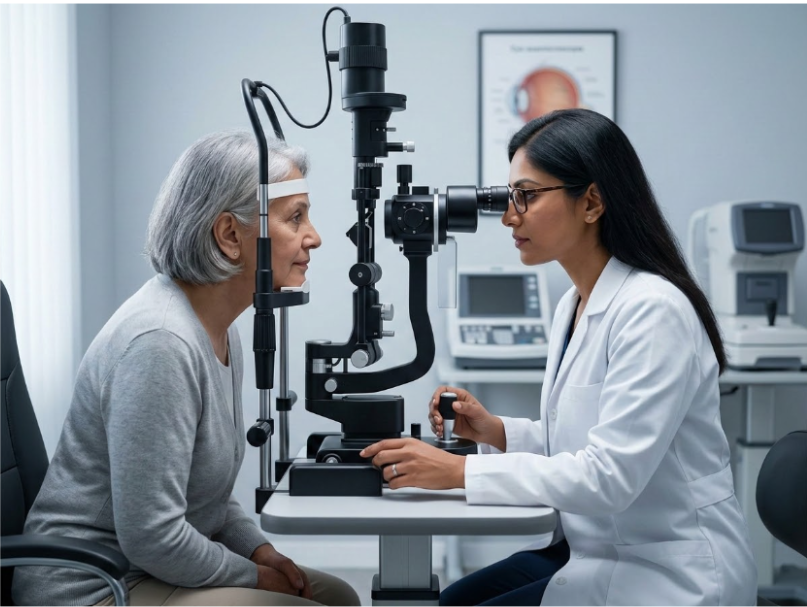
An ophthalmologist may perform a comprehensive eye examination, which can include:
- Visual acuity testing
- Slit-lamp examination
- Dilated eye examination
- Eye pressure measurement
- Examination of the retina and other eye structures
- Additional tests when clinically required
A dilated eye examination allows an eye specialist to examine the lens and other structures inside the eye and identify cataracts as well as other possible causes of vision problems.
What Is Cataract Treatment?
The appropriate cataract treatment depends on the severity of the cataract and how much it affects your daily activities.
Early-Stage Cataract Treatment
When cataracts are mild and do not significantly interfere with everyday activities, surgery may not be needed immediately.
Depending on your individual situation, your eye specialist may recommend:
- Updating your glasses prescription
- Improving lighting while reading
- Using anti-glare sunglasses
- Using magnifying aids for certain activities
- Regular eye examinations
These measures may help improve vision or comfort in the early stages, but they do not remove an established cataract.
Cataract Surgery
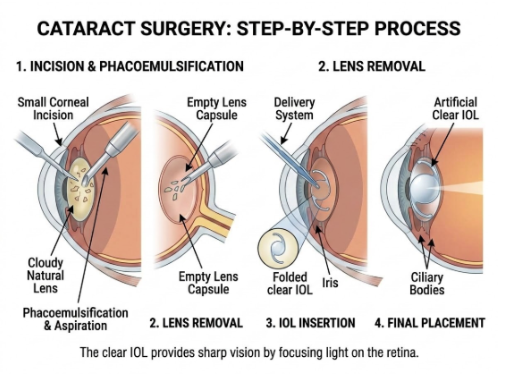
When cataracts significantly affect daily activities, your ophthalmologist may recommend cataract surgery.
During cataract surgery, the cloudy natural lens is removed and replaced with an artificial intraocular lens (IOL). The choice of IOL depends on several individual factors and should be discussed with your eye specialist.
When Is Cataract Surgery Needed?
Cataract surgery is generally considered when vision loss starts interfering with activities such as:
- Reading
- Driving
- Watching television
- Working
- Recognizing faces
- Performing routine household activities
You do not necessarily need to wait until your vision becomes extremely poor. The appropriate timing depends on your symptoms, lifestyle, eye health and discussion with your ophthalmologist.
Can Cataract Be Prevented?
There is no guaranteed way to prevent every cataract, particularly those associated with ageing. However, several healthy habits may help protect your eyes and reduce certain risk factors.
Protect Your Eyes From UV Radiation
Use sunglasses that provide appropriate UVA and UVB protection when outdoors. A hat with a brim can provide additional protection from sunlight.

Avoid Smoking
If you smoke, consider quitting. Smoking can increase the risk of cataract and several other health conditions.
Eat a Balanced Diet
A balanced diet containing fruits, vegetables, leafy greens, whole grains, nuts and other nutritious foods supports overall health and eye health.
Manage Diabetes
If you have diabetes, follow your healthcare professional’s recommendations for managing your blood glucose and attend recommended eye examinations.
Protect Your Eyes From Injury
Use appropriate protective eyewear during activities that could expose your eyes to flying particles, chemicals or other hazards.
Have Regular Eye Examinations
Regular eye examinations can help detect cataracts and other eye conditions. The frequency of examinations should be based on your age, risk factors and your eye specialist’s advice.
When Should You See an Eye Specialist?
You should schedule an eye examination if you notice changes in your vision, particularly if they are gradually getting worse.
Consult an eye specialist if you experience:
- Persistent blurry vision
- Increasing glare
- Difficulty seeing at night
- Difficulty reading
- Faded colours
- Frequent changes in spectacle prescription
- Vision problems affecting your daily activities
Do Not Ignore Sudden Vision Changes
Cataracts generally develop gradually. Sudden vision loss or significant sudden changes in vision should not simply be assumed to be cataract.
Seek urgent medical attention for sudden vision loss, severe eye pain, new flashes of light, a sudden increase in floaters or a curtain-like shadow over your vision.
Cataract Myths vs Facts
Myth 1: Cataract Can Be Removed With Eye Drops
Fact: Eye drops may be used for various eye conditions or during recovery after surgery, but they do not remove an established cataract. Surgery is the definitive treatment for removing a cataract.
Myth 2: Cataract Only Happens in Very Old People
Fact: Cataracts are strongly associated with ageing, but they can also occur because of eye injuries, certain medical conditions, medications or other causes.
Myth 3: Cataract Is Always Painful
Fact: Cataracts commonly develop gradually and without pain. The main problem is usually progressive changes in vision.
Myth 4: You Must Wait Until You Are Almost Blind for Surgery
Fact: Cataract surgery is generally considered when the cataract begins interfering with everyday activities. The timing should be discussed with an ophthalmologist.
Take Care of Your Vision Before Cataract Affects Your Daily Life
Cataract is a common eye condition, particularly with increasing age, but changes in vision should not simply be ignored.
Recognizing cataract symptoms, understanding cataract causes and getting timely eye examinations can help you make informed decisions about your vision. If cataract begins interfering with reading, driving, working or other daily activities, an ophthalmologist can assess your condition and discuss appropriate cataract treatment.